



Mercury and Amalgams
Mercury is one of to most neurotoxic substances known to man – it is more toxic than lead, cadmium, or even arsenic, and mercury in amalgams is well-known.
Mercury has no NOEL [no-observed-effect level], meaning that there is NO level of mercury at which mercury isn’t harmful to the body. It is highly toxic even in the smallest quantities!
Mercury can cause a variety of health problems and has even been linked to Alzheimer’s and Parkinson’s disease. Mercury crosses the blood-brain barrier and adversely affects neurological functions. It has also been shown to impair kidney function and induce several types of tumors in rats and mice.
Like other toxins, mercury gets passed on from the mother to the baby (through the placenta during pregnancy and later via breastfeeding) and can cause severe learning disabilities and mental retardation. The National Academy of Sciences estimates that 60,000 newborns a year could be at risk of disabilities because of mercury their mothers absorbed during pregnancy.
While mercury is present in fish and other food, the most common source of mercury poisoning are amalgam fillings in teeth.
AMALGAM FILLINGS:
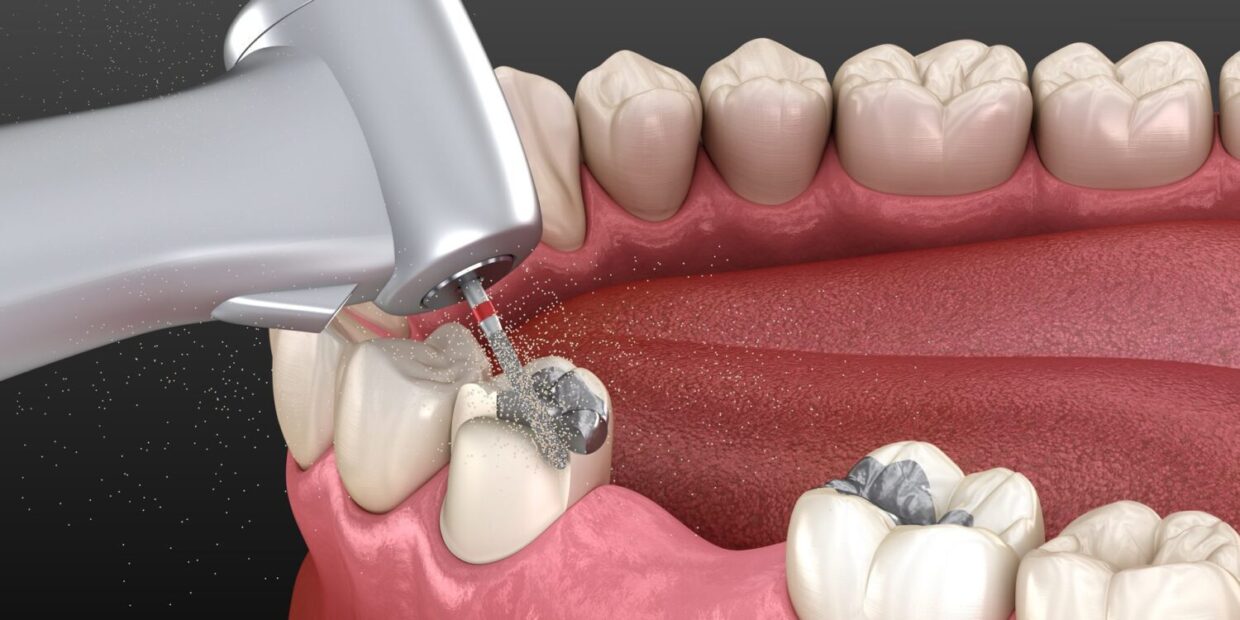
 Amalgam (made of 50% mercury) was found to be a cheap and long-lasting substance to fill teeth with – the danger of mercury poisoning was overlooked or ignored. The use of amalgams is now prohibited in many countries but is still legal in the U.S.
Studies have shown that the general population in America absorbs more mercury from dental fillings than from any other source.
There is more mercury in dental fillings than in all other products sold in America. The U.S. Environmental Protection Agency states that 55% of all mercury in commerce today in the United States – an estimated 1,088 tons of mercury – resides in Americans’ dental fillings!
An additional 34 tons of mercury is added to dental fillings every year. Research has shown that amalgam fillings give off a high dose of the highly toxic gas methylmercury. Chewing gum, drinking hot drinks, or brushing your teeth further increases the level of mercury released by these fillings. The mercury then enters our bloodstream and is stored in tissues and organs for years to come. It can only be released by using a chelator [metal binding agent] such as HMD™.
Even though at least 17 separate studies have confirmed that dental patients absorb a daily dose of mercury derived from their mercury fillings, the U.S. government has never tested mercury fillings for safety. How crazy is that!
So just to recap: Mercury is highly toxic and can cause serious illnesses, yet it is still offered to the unsuspecting public in the form of dental fillings so that EVERY TIME we CHEW we release TOXIC MERCURY into our bodies. Wonderful!
If you have any doubts about how bad this is, then read these fact sheets published by www.toxicteeth.org:
Measurably Misleading
Mums Against Mercury vs FDA
Watch the following two videos prepared by the International Academy of Oral Medicine and Toxicology.
SMOKING AMALGAMS
Watch this fascinating video NOW!
This is an extract from a video shot by The International Academy of Oral Medicine and Toxicology. It shows an amalgam tooth that was extracted many years ago and is still giving off high levels of toxic mercury vapor. Imagine if this amalgam was in your mouth, along with many others!
HOW MERCURY DESTROYS THE BRAIN
Watch this fascinating video NOW!
This video produced by the University of Calgary clearly shows how even low levels of mercury completely degenerate brain tissue in a short amount of time.
Luckily you can do something about this!
It is important to note that even if you had your fillings removed, the mercury will still be in your body, causing havoc at a cellular level. If you are thinking of having your Amalgams removed shortly, please read our specific Amalgam Detox Protocol below:
AMALGAM DETOX PROTOCOL
Thinking of having your amalgams removed? You definitely should – they are toxic and dangerous.
However, we strongly recommend that you start your heavy metal detox at least a couple of months BEFORE sitting in the dentist’s chair and continue for 3-6 months afterward. This cannot be emphasized enough as our team of health experts [notably Dr. Georgiou] has personally seen and treated many people who became very ill after amalgam removal.
We have witnessed people develop the most severe illnesses such as MS, cancer, severe mitral valve prolapse [heart disease], and other neurological disorders.
This is due to the vast amount of mercury released during the removal process. We recommend you only remove amalgams while following a FULL DETOX PROGRAM.
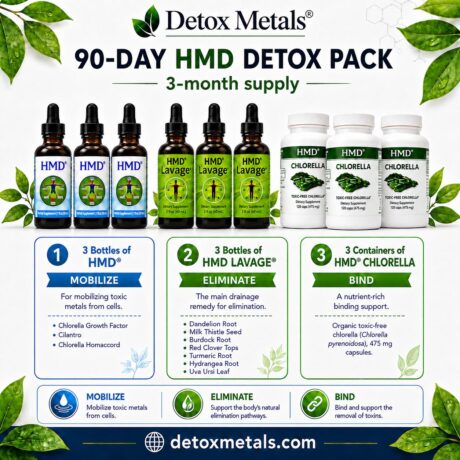
Because of the high toxicity of mercury as well as the high doses that amalgams regularly release, we strongly recommend you supplement HMD™ with LAVAGE and CHLORELLA.
In addition, we recommend taking A-Lipoic Acid, which is an excellent antioxidant that will help protect you from free radical damage from stray methyl mercury during the amalgam replacement. We recommend a dose of 300 mg x 3 times daily.
Seek out a dentist who will put in place protective measures during amalgam removal, to minimize the harmful release of harmful mercury vapor during the procedure. A holistic dentist would likely follow such a protocol.
MERCURY IN VACCINES
For many years Thimerosal was added as a preservative to vaccines. Thimerosal contains around 50% mercury and is highly toxic. Mercury is known to cause immune, sensory, neurological, motor, and behavioral dysfunctions that are similar to the traits defining autism.
Service personnel who have been subjected to many different injections for their tours of duty are also at risk. Although Thimerosal has been phased out of many preparations, the effects can still be felt. Mercury accumulates in the body and stays there forever unless an effective detoxifier such as HMD™ is being used to cleanse the body.
Conclusion
While the use of mercury in dental amalgams is still a topic of debate, the potential health risks associated with mercury vapor release cannot be ignored.
Individuals with amalgam fillings should be aware of these risks and consider consulting with a healthcare provider if they experience unexplained symptoms.
The decision to remove or replace amalgam fillings should be made after a thorough evaluation of the potential benefits and risks, ideally with the guidance of a healthcare professional knowledgeable about mercury toxicity.