


HMD® Heavy Metal Detox Research | Published Clinical Studies

HMD® Heavy Metal Detox Research |
Published Clinical Studies
Explore published papers and educational resources related to HMD® ingredients and formulation background
The papers below present the study design, observations and findings from Dr Georgiou’s research into the HMD® formulation
Scientific research on natural heavy metal chelators: testing what works
Want to understand the complete HMD® system?
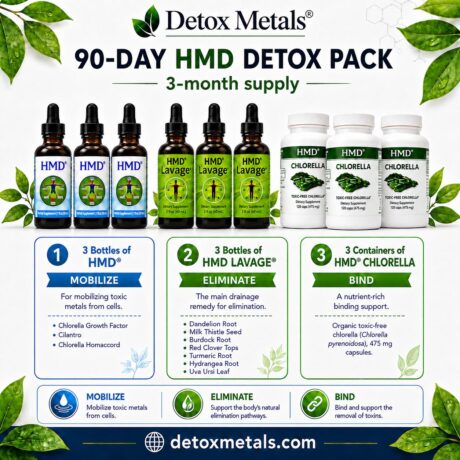
Learn how the HMD® Triple Action approach combines HMD®, Chlorella and HMD Lavage® as part of a structured heavy metal detox support programme.
Compare 30-, 60- and 90-Day Programmes
Citation: Georgiou G. Scientific research on natural heavy metal chelators: testing what works. Int J Complement Alt Med. 2018;11(5):262?267. DOI: 10.15406/ijcam.2018.11.00409
Abstract
Introduction: There are numerous reports in the literature that discuss the heavy-metal chelation properties of various natural substances 1–7. Many of these have never been tested systematically using the “gold standard” methodology of the double–blind, placebo- controlled trial.
Our research group was commissioned by a Russian metal foundry to examine the chelating effects of these natural substances and to identify a natural compound effective at chelating multiple toxic metals from the blood of Russian metal foundry workers.
Design, methods and analysis: This was a randomised, double–blind, placebo-controlled trial with 350 metal foundry workers using a number of natural substances purported in the literature to chelate heavy metals. Adult males aged 18–60 years were randomly allocated to groups and given various natural substances to assess their chelating potential for heavy metals.
Each group consisted of a control group and an experimental group. ICP–MS pre– and post–analysis of urine, blood, and hair samples was carried out over a 3–year period.
Discussion: This trial was designed to identify the best natural compound that can be safely used to chelate men working in environments contaminated with heavy metals.
If successful, this naturally occurring compound may play a significant role in the treatment, prevention, and general well–being of people working in toxic environments, such as metal foundries and other industries with toxic by–products.
Ready to learn how the HMD®
system is used?
Compare the 30-, 60- and 90-Day HMD Programs
Introduction
Environmental pollution is very prominent in point–source areas such as mining, foundries and smelters, and other metal–based industrial operations.8
Background and rationale
The main rationale and objective of this research were to identify effective natural heavy-metal chelators that can be safely used by people with varying degrees of heavy-metal toxicity. To date, the research in this field of natural chelators has been methodologically weak and scant.
Objectives
Over a period of three years, a number of natural substances were tested in double-blind, placebo-controlled trials. Over this period, natural compounds were identified that could safely and effectively chelate heavy metals from people who had accumulated high levels of these metals from their working environment.
Trial design
Pre- and post-urine and faeces tests were conducted on all these natural compounds using ICP–MS spectrometry.9
Methods and analysis
Study setting
The research study involved a group of medical doctors from a local Russian hospital who also served on the ethics committee. There was also a group of analytical chemists from the plant, along with nurses, translators, secretaries, administrators, and other experts in analytical chemistry who took part in the research over the three–year period.
Subjects
All subject participation was voluntary; each person signed a Consent Form that outlined clear criteria for participation in the research. There was a sample of 347 men, aged between 18 and 60 years, who took part in all the trials.
Natural substances analysed
In total, 14 natural substances and their combinations were tested. The natural substances tested were as follows:
- Chlorella pyrenoidosa
- Homeopathic Chlorella
- Cilantro tincture
- Chlorella Growth Factor
- Homeopathic DMSA
- PleoChelate (a German homoeopathic)
- Homoeopathic Chlorella+Chlorella Growth Factor (CGF)+Cilantro
- Homoeopathic Chlorella+Chlorella Growth Factor (CGF)+Cilantro+PleoChelate
- Homoeopathic Chlorella+Chlorella Growth Factor (CGF)+Cilantro+PleoChelate+Homeopathic DMSA
- Cilantro paste (not tincture) with vitamin C
- Cilantro paste, vitamin C and homoeopathic lead
- Cilantro paste, vitamin C and homoeopathic arsenic
- Cilantro paste, vitamin C and homoeopathic cadmium
- Cilantro paste, vitamin C and homoeopathic antimony
Ready to learn how the HMD® system is used?
Compare the 30-, 60- and 90-Day HMD Programs
The research design
Initial screening for toxicity
To initially determine the levels of toxicity and the specific heavy metals common to the metal foundry, a convenient and cost–effective screening method known as Tissue Hair Mineral Analysis (THMA) was used.10 Of the total number of over 2,000 employees from the metallurgical smelting plants (most toxic areas), a random sample of 374 (18.7%) were chosen to undergo a Tissue Hair Mineral Analysis (THMA)11 at a reputable laboratory in the USA.
Samples tested
Pubic hair was chosen as this is less exposed to environmental pollution from the plant and was sent to the laboratory and analysed for 8 different types of heavy metals, namely Antimony (Sb), Uranium (U), Arsenic (As), Beryllium (Be), Mercury (Hg), Cadmium (Cd), Lead (Pb) and Aluminium (Al). There were also a further 15 minerals analysed.
The four main metals common to all workers were antimony (Sb), arsenic (As), cadmium (Cd), and lead (Pb), all at very high levels. These metals were the ones chosen for further study, as they were the main by–products of the metal foundry’s manufacturing process. Mercury was not really an issue, as Russians do not use amalgam fillings, but gold alloys, and seldom eat fish.
Research design
The research design was a double blind, placebo–controlled study–neither participants, researchers, nor the analytical chemists doing the spectrometry analysis knew which treatment protocol each participant belonged to. The coding was stored in the coordinator’s safe until it was time to interpret the statistical data.
The research method
Testing methods
A baseline pre–urine sample was collected over 24 hours in a 2–litre plastic container designed for urine collection. After thorough mixing, a 50ml sample of this urine was collected and sent to certified laboratories in the USA for ICP–MS testing. The subject was then given another 2-litre container and began taking the natural substance that was being tested.
This they took three times daily in the dosages stated below, while continuing to collect all urine over 24hours. A further post–sample was sent to the same laboratory, and the levels of the pre– and post–urine samples were compared.
To determine the route of elimination (biliary vs urinary), the same procedure was performed for each subject, and pre– and post–faeces samples were collected and sent to the same laboratory.
This was done over 48 hours while taking the natural substance in question, given its slower transit time. Pre- and post-faeces samples were also compared and statistically analysed.
Immediately after the trials, blood samples were taken from all the participants and analysed for a number of liver and kidney function tests to determine whether the detoxification organs were being stressed by the natural chelating compounds used.
All participants were given time off work during the trials, as it was important that they not continue to be exposed to heavy metals during the pre–post testing period.
However, two workers in the sample continued working during the trial due to work pressures.
After baseline urine samples were collected for 24 hours, along with faeces, each participant was given their specific detoxification remedy as needed and began taking it three times per day (see Treatment Protocols below).
All participants took certified, metal–free, high–grade, cell–decimated Chlorella tablets 12–16 (500 mg x3 daily) to prevent the reabsorption of metals from the gut, given the high levels of toxic metals measured in these workers. This was an added precaution to prevent any adverse reactions.
The placebo group also took this chlorella. The results indicated that the chlorella by itself was not chelating metals per se.
High impact jet–spray drying that pulverizes the algae wall breaks the Chlorella cell walls, making it into cell–decimated chlorella.17 The pulverising helps to increase absorption of its vital nutrients.
Furthermore, all the homoeopathic homaccords used in the study were prepared by a reputable homoeopathic pharmacy in the UK.
Statistical analysis
Statistical analysis was conducted using the Statistical Package for the Social Sciences (SPSS).18 A biostatistician was responsible for running all the analyses using ANOVA, Pearson’s correlation coefficients and other descriptive statistics.
Natural substances trials
Over the three years, a number of trials were conducted using 14 different natural substances and combinations of these, which the literature purported to be effective chelators.
All 374 workers that were initially screened using the THMA took part in at least one of these trials. The various substances and their combinations tested in the trials consisted of the following–the dosages of each are mentioned in the results section–below:
- Placebo or Control Group–taking only water with a little cognac added to mask the taste.
- Homoeopathic Chlorella Group–this consisted of a homaccord of homoeopathic chlorella ranging from 6c to 30c.
- Cilantro Group19–taking Cilantro or Coriandrum sativum leaf tincture.
- Chlorella Growth Factor, taken alone.
- Homoeopathic DMSA, using a homaccord of homoeopathic DMSA of 6c to 30c as a tincture.
- PleoChelate20–a ready–made remedy prepared by Sanum–Kehlbeck, GmbH & Co, purported to chelate metals. It consists of minerals in homoeopathic D2 dosage in water.
- Homoeopathic cell–decimated Chlorella+Chlorella Growth Factor (CGF)+Cilantro in the form of organic Coriandrum sativum leaf tincture.
- Homoeopathic cell–decimated Chlorella+Chlorella Growth Factor (CGF)+Cilantro in the form of organic Coriandrum sativum leaf tincture+PleoChelate.
- Homoeopathic cell–decimated Chlorella+Chlorella Growth Factor (CGF)+Cilantro in the form of organic Coriandrum sativum leaf tincture+PleoChelate+Homeopathic DMSA (Homaccord 6c, 12c and 30c).
- Cilantro and vitamin C21,22 together. Cilantro paste (see below) was taken at 1 tablespoon daily, with 2 grams of vitamin C, 3 times daily.
- Cilantro, vitamin C and homoeopathic lead, arsenic, cadmium and antimony (homaccords of 6c to 30c).
- The homeopathics were taken separately as individual homaccords, such as plumbum (60 drops x3 daily), concomitantly with the Cilantro paste (See below) and the vitamin C (5 grams, 2 times daily).
Ready to learn how the HMD® system is used?
Compare the 30-, 60- and 90-Day HMD Programs
Results
Summary of the results of the natural compounds tested
The data presented in Table 1 (N=220) show the success (√) or failure (×) of these trials with the above–named natural substances. Success was defined as an increase in the specific metal at post–testing compared to baseline for the group as a whole. To be considered a “successful” remedy (√), it must have shown the ability to eliminate metals in ALL the people involved in the particular trial.
Natural compounds used | Pb | Pb | Cd | Cd | Sb | Sb | As | As |
|---|---|---|---|---|---|---|---|---|
U | F | U | F | U | F | U | F | |
Placebo or Control Group | X | X | X | X | X | X | X | X |
Chlorella Growth Factor | X | X | X | √ | X | X | X | X |
PleoChelate | X | X | X | X | X | X | √ | X |
Homeopathic DMSA | X | X | X | √ | X | X | X | X |
Cilantro Tincture | X | X | X | X | X | X | X | X |
Homeopathic Chlorella | X | X | X | X | X | X | X | X |
Homeopathic Chlorella + CGF + Cilantro (HMD™) | √ | √ | √ | √ | √ | √ | √ | √ |
Homeopathic Chlorella + CGF + Cilantro + PleoChelate | X | X | X | √ | X | X | X | √ |
Homeopathic Chlorella + CGF + Cilantro + PleoChelate + Homeopathic DMSA | X | X | X | X | X | X | X | X |
Cilantro Paste + Vitamin C | X | √ | X | √ | X | X | X | X |
Cilantro + Vitamin C + Homoeopathic Plumbum | √ | X | X | X | X | X | X | X |
Cilantro + Vitamin C + Homoeopathic Arsenicum | X | X | X | X | X | X | X | X |
Cilantro + Vitamin C + Homoeopathic Antimonium | X | X | X | X | X | X | X | X |
Cilantro + Vitamin C + Homoeopathic Cadmium | X | X | √ | X | X | X | X | X |
Table 1. The effectiveness of different natural compounds tested (N=220) U, urine; F, faeces
The results of the various trials over the 3–year period can be summarised below–there were a total of 220 people who took part in these trials:
Chlorella growth factor23 by itself was only effective at eliminating cadmium in faeces at a dosage of 40 drops x 3 daily. The post–faeces sample had 150% more cadmium than the baseline sample.
PleoChelate, a homoeopathic mineral compound produced by Sanum–Kehlbeck in Germany and used by many Biological Medicine specialists, was effective at chelating arsenic only in urine. The dosage was 60 drops x 3 daily, with an average increase of about 500% in arsenic in the post–urine test compared to baseline.
Homoeopathic DMSA, used at 50 drops x 3 daily, showed elimination of cadmium in faeces (400% increase) and arsenic in urine (1,200% increase).
Cilantro tincture (60 drops x 3 times daily). This was the only natural substance used that showed a strong percentage decrease in metals in post–urine and faeces compared to baseline. The levels were consistently around a 90–100% decrease across all metals tested.
This consistency and repetitiveness in results is indicative that the Cilantro tincture is probably pushing toxic metals back into the cell.
One hypothesis to explain this phenomenon would be that when Cilantro is used alone, it is probably removing metals intracellularly into the mesenchyme, but as there are no other chelators to attach to the metals in the mesenchyme, through the law of osmosis (higher concentration to lower concentration), the metals are being reabsorbed back into the cell.
The body is therefore withholding more metals than the baseline or pre–provocation sample. This “osmotic backlash” could prove detrimental for a severely toxic person with chronic disease, particularly neurological diseases.
Homoeopathic Chlorella at potencies of 6c to 30c did not eliminate any of the metals in the post–provocation test.
Cilantro, vitamin C and homoeopathic lead, arsenic, cadmium and antimony (homaccords of each homoeopathic from 6c to 30c).
Each homoeopathic would chelate and eliminate the metal it represented; for example, plumbum would chelate lead, the arsenic homoeopathic would chelate arsenic, and so forth.
Homoeopathic Chlorella Homaccord, CGF, and the Cilantro compound, now known as HMD®, showed the most promise, as it eliminated ALL the metals tested, both through the urinary and biliary routes.
The results for this compound are shown in Table 2–both for the urine and for the faeces samples. The elimination of the four metals is compared to the placebo trials.
Once it was established that the homoeopathic Chlorella+Cilantro+CGF was the most promising compound, this was further tested amongst 84 foundry workers to determine the exact percentage of each substance in the compound, as well as the dose that was most effective for each of the metals tested.
HEAVY METALS TESTED | Mean % increase after provocation | Mean % increase of Placebo | Number in sample | Results on statistical test | Degrees of Freedom | Level of Significance |
ARSENIC-U | 7409% | 11.16% | 84 | – | – | p<0.0005 |
ARSENIC-F | 59.83% | 61.13% | 84 | – | – | p<0.05 |
LEAD-U | 466.47% | -16.95% | 84 | – | – | p<0.005 |
LEAD-F | 142.16% | -6.01% | 84 | – | – | p<0.05 |
CADMIUM-U | 67% | -27.91% | 84 | – | – | p<0.05 |
CADMIUM-F | 43.13% | 22.62% | 84 | – | – | p<0.05 |
ANTIMONY-U | 59.16% | 14.91% | 84 | – | – | p<0.05 |
ANTIMONY-F | 50% | 6.61% | 84 | – | – | p<0.05 |
NICKEL-U | 80% | 5.52% | 77 | t=1.425 | 76 | p<0.158 |
BISMUTH-U | 564% | 7.95% | 19 | t=2.109 | 18 | p<0.04 |
URANIUM-U | 707% | 18.23% | 76 | t=1.015 | 75 | p<0.03 |
MERCURY-U | 448% | 0.80% | 56 | t=5.395 | 55 | p<0.0005 |
Table 2. Test results of the natural compound HMD® – number of trials over a 3-year period. U, urine; F, faeces
Ready to learn how the HMD® system is used?
Compare the 30-, 60- and 90-Day HMD Programs
Detailed results of the HMD® compound trials
The only compound that was effective at mobilising and eliminating all metals was HMD®, a proprietary synergistic blend of three natural ingredients in liquid form that are taken orally:
- Chlorella Growth Factor (CGF)
- Organic Coriandrum sativum leaf tincture
- Homaccord of cell–decimated, energised Chlorella pyrenoidosa
Table 2 shows the summarised results of several trials over a three–year period.
The mean percentage increase of heavy metals after provocation with the HMD® is compared with the elimination with placebo (a highly diluted chlorella tincture).
The post–provocation urine samples were collected after 24hours and the post–provocation faeces samples after 48hours due to the slower transit time–“U” denotes the Urine samples and “F” the Faeces samples.
Apart from the 4 initial heavy metals tested, other metals such as Nickel (Ni), Bismuth (Bi), Uranium (U) and Mercury (Hg) were also tested in these trials, but only using pre– and post-urine samples (not faeces).
All post-sample measures were statistically significantly higher than the baseline measures for all metals tested, including As, Pb, Cd, Sb, Ni, Bi, U, and Hg, indicating that HMD® eliminated all metals.
Table 2 also shows that the predominant route of excretion for all metals is via urine, thereby reducing the possibility of reabsorption through the bowel.
Interestingly, when these individual components were tested separately, there was negligible chelating activity, but when combined, there was a powerful synergy that enabled chelation and elimination of all the metals tested via the urinary route rather than the biliary route.
This has additional advantages, as it prevents the reabsorption of metals from the gut.
Testing for mercury
Following the initial research, a separate trial of mercury alone was conducted with 56 subjects. All urine analyses were conducted on a mercury–dedicated
PSA Atomic Fluorescence Spectrometer measuring at levels of parts per billion.
The 56 subjects participated in a 24–hour provocation trial using HMD® at dosages of 40, 50 and 60 drops throughout the day. Initial six-hour baseline pre–urine samples were collected, along with a 24–hour collection for the post–urine sample.
The results (Table 3) showed a 448 per cent increase in mercury elimination after a 24-hour HMD® provocation among the 56 people tested, compared with the baseline sample.
Moreover, there was a negligible increase in mercury in the control group that received only diluted powdered chlorella in a small amount of alcohol.
There was a statistically significant difference between the percentage increase of mercury in the post–sample compared to the controls (t=5.395, df=55, p<.0005).
Provocation with HMD® | Mercury elimination in urine |
Pre-test | 12.62% |
Post-test | 448% |
Table 3 Results of the HMD® testing in urine for mercury (N=56)
Liver and kidney serum test results during the HMD® pre–post provocation trials
During the HMD® research trials, blood samples were collected from a small group of participants (N=16) to assess the effects of HMD® provocation on liver and kidney function tests.
The average percentage increase was calculated from the pre– and post-sample figures for these biochemical tests.
The main components tested were liver function (bilirubin, Alanine Aminotransferase (ALT), Aspartate Aminotransferase (AST), and kidney function (urea and creatinine).
Table 4 shows the percentage increase in these biochemical parameters in the post–serum samples compared with the baseline serum sample collected before HMD®.
Overall, there are small, average increases in creatinine, bilirubin, urea, ALT, and AST, but none that exceed pathological parameters. The minimum and maximum levels are also shown, but the higher levels were generally present in only one individual.
Liver & kidney function test results during HMD™ provocation | |||||
Creatinine | Bilirubin | UREA | ALT | AST | |
% INCREASE | 11.95 | 3.15 | 25.35 | 16.74 | 5.25 |
MINIMUM | 0 | 0 | 0 | 0 | 0 |
MAXIMUM | 42.8 | 20.19 | 53.73 | 75 | 38.46 |
N= | 16 | 16 | 16 | 16 | 16 |
Table 4 Details of the liver and kidney function tests
These tests indicate that HMD® is a “gentle chelator” that does not adversely affect liver and kidney function test results and is well tolerated by most adults.
Conclusion
This brief presentation of this three year research study to determine a cost–effective and safe metal chelator that can be used on a mass scale in metal foundries, as well as by the general population, has clearly shown that HMD® has proven to be an effective natural chelator for As, Pb, Cd, Sb, Ni, Bi, U and Hg in all the trials conducted.
Ready to learn how the HMD® system is used?
Compare the 30-, 60- and 90-Day HMD Programs
Acknowledgements
None.
Conflicts of interest
The author declares there is no conflict of interest towards the manuscript.
The author
Dr Georgiou, PhD, N.D., has been an active clinician for over 40 years and is the Founder/Director of the Da Vinci Holistic Health Centre (www.naturaltherapycenter.com), which specialises in the treatment of chronic diseases.
He is also the principal investigator of this HMD® research and the Director of the Da Vinci BioSciences Research Centre in Larnaca, Cyprus, where he conducts laboratory and clinical research on heavy metals, novel ways of eradicating infectious diseases, and Biophysics. Email: admin@detoxmetals.com
References
- Karnika AH, Reddy RS, Saradhi SV, et al. An eco–friendly alternative for heavy metal removal. Afr J Biotechnol. 2007;6:292–31.
- Shim JA, Son YA, Park JM, et al. Effect of Chlorella intake on Cadmium metabolism in rats. Nutr Res Pract. 2009;3(1):15–22.
- Queiroz ML, Rodrigues AP, Bincoletto C, et al. Protective effects of Chlorella vulgaris in lead–exposed mice infected with Listeria monocytogenes. Int Immunopharmacol. 2003;3(6):889–900.
- Deldar K, Nazemi E, Balali Mood M, et al. Effect of Coriandrum sativum L. extract on lead excretion in 3–7 year old children. J Birjand Univ Med Sci. 2008;15(3):11–19.
- Uchikawa T, Kumamoto Y, Maruyama I, et al. Enhanced elimination of tissue methylmercury in Parachlorella beijerinckii–fed mice. J Toxicol Sci. 2011;36(1):121–126.
- Abascal K, Yarnell E. Cilantro–culinary herb or miracle medicinal plant? Alternative and Complementary Therapies. 2102;18(5):259–264.
- Aga M, Iwaki K, Ueda Y, et al. Preventive effect of Coriandrum sativum (Chinese parsley) on localized lead deposition in ICR mice. J Ethnopharmacol. 2001;77(2–3):203–208.
- Fergusson JE. The Heavy Elements: Chemistry, Environmental Impact and Health Effects. Oxford: Pergamon Press; 1990. 614 p.
- Dean JR. Atomic Absorption and Plasma Spectrometry. 2nd ed. UK: John Wiley; 1997.
- Passwater, RA, Cranton EM. Trace elements, Hair analysis and nutrition. New Canan: Keats Publishing, Inc; 1983.
- Toxic Trace metals in mammalian and human hair and nails, EPA–600 4.049, August 1979, U.S. Environmental Protection Agency, Research and Development. This is a review of 400 studies on hair analysis and toxic metals.
- Janusz Pempkowiak, Alicja Kosakowska. Accumulation of cadmium by green algae Chlorella vulgaris in the presence of marine humic substances. Environment International. 1998;24(5–6):583–588.
- Akhtara NJ. Iqbalb M. Removal and recovery of nickel(II) from aqueous solution by loofa sponge–immobilized biomass of Chlorella sorokiniana: characterization studies. Journal of Hazardous Materials. 2004;108(1–2):85–94.
- Beceiro–González E, Taboada–de la Calzada E, Alonso–Rodríguez P, et al. Interaction between metallic species and biological substrates: approximation to possible interaction mechanisms between the alga Chlorella vulgaris and arsenic(III). TrAC Trends in Analytical Chemistry. 2000;19(8):475–480.
- Morrison GMP, Florence TM. Comparison of physicochemical speciation procedures with metal toxicity to chlorella pyrenoidosa. Analytica Chimica Acta. 1988;209:97–109.
- Rai LC, Gaur JP, Kumar HD. Protective effects of certain environmental factors on the toxicity of zinc, mercury, and methylmercury to Chlorella vulgaris. Environ Res. 1981;25(2):250–259.
- Mitsuda H, Nishikawa Y, Higuchi M, et al. Effects of breaking of chlorella cells on the digestibility of Chlorella protein. J Jpn Soc Food Nutr. 1977;30:93–98.
- Norusis, MJ. SPSS Professional Statistics 6.1, Chicago, USA: SPSS Inc; 1994.
- Omura Y, Beckman SL. Role of mercury (Hg) in resistant infections & effective treatment of Chlamydia trachomatis and Herpes family viral infections (and potential treatment for cancer) by removing localized Hg deposits with Chinese parsley and delivering effective antibiotics using various drug uptake enhancement methods. Acupunct Electrother Res. 1995;20(3–4):195–229.
- www.sanum.com
- Poliandri AH1, Cabilla JP, Velardez MO, et al. Cadmium induces apoptosis in anterior pituitary cells that can be reversed by treatment with antioxidants. Toxicol Appl Pharmacol. 2003;190(1):17–24.
- Gurer H, Ercal N. Can antioxidants be beneficial in the treatment of lead poisoning? Free Radic Biol Med. 2000;29(10):927–945.
- Sano T, Kumamoto Y, Kamiya N, et al. Effects of lipophilic extracts of Chlorella vulgaris on alimentary hyperlipidemia in cholesterol fed rats. Artery. 1988;15(4):217–224.
©2018 Georgiou. This is an open access article distributed under the terms of the, which permits unrestricted use, distribution, and build upon your work non-commercially.