

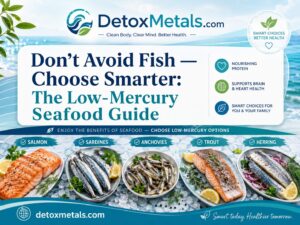
HEAVY METALS IN FISH

Don’t Avoid Fish — Choose Smarter!
PODCAST: THE LOW-MERCURY SEAFOOD GUIDE Don’t Avoid Fish — Choose Smarter! The Low-Mercury Seafood Guide Fish, Mercury and the Smart Seafood Strategy Fish is one of the most

PODCAST: HEAVY METALS IN BABY FOODS
There are few things more personal than feeding a baby. Parents spend so much time reading labels, comparing brands, choosing organic options, avoiding unnecessary additives, and trying to give their little ones the cleanest start possible.
So when headlines appear about lead, arsenic, cadmium, or mercury in baby foods, it is completely understandable that parents feel worried. I do not think this is a reason to panic, but I do think it is a very good reason to ask better questions.
The important thing to understand is that heavy metals are not usually added to baby food as ingredients. They are environmental contaminants. Lead, arsenic, cadmium, and mercury can be present in soil, water, and air because of natural geology, pollution, mining, industrial activity, older pesticides, and other human sources.
Since food begins in the environment, small amounts of these toxic elements can make their way into crops, grains, juices, water, and processed foods.
This is why the discussion needs to be balanced. Heavy metals in food are not new, and they are not only a baby food problem. However, babies and young children deserve special attention because their bodies are smaller, they eat more relative to their body weight than adults do, and their brains and nervous systems are developing rapidly.
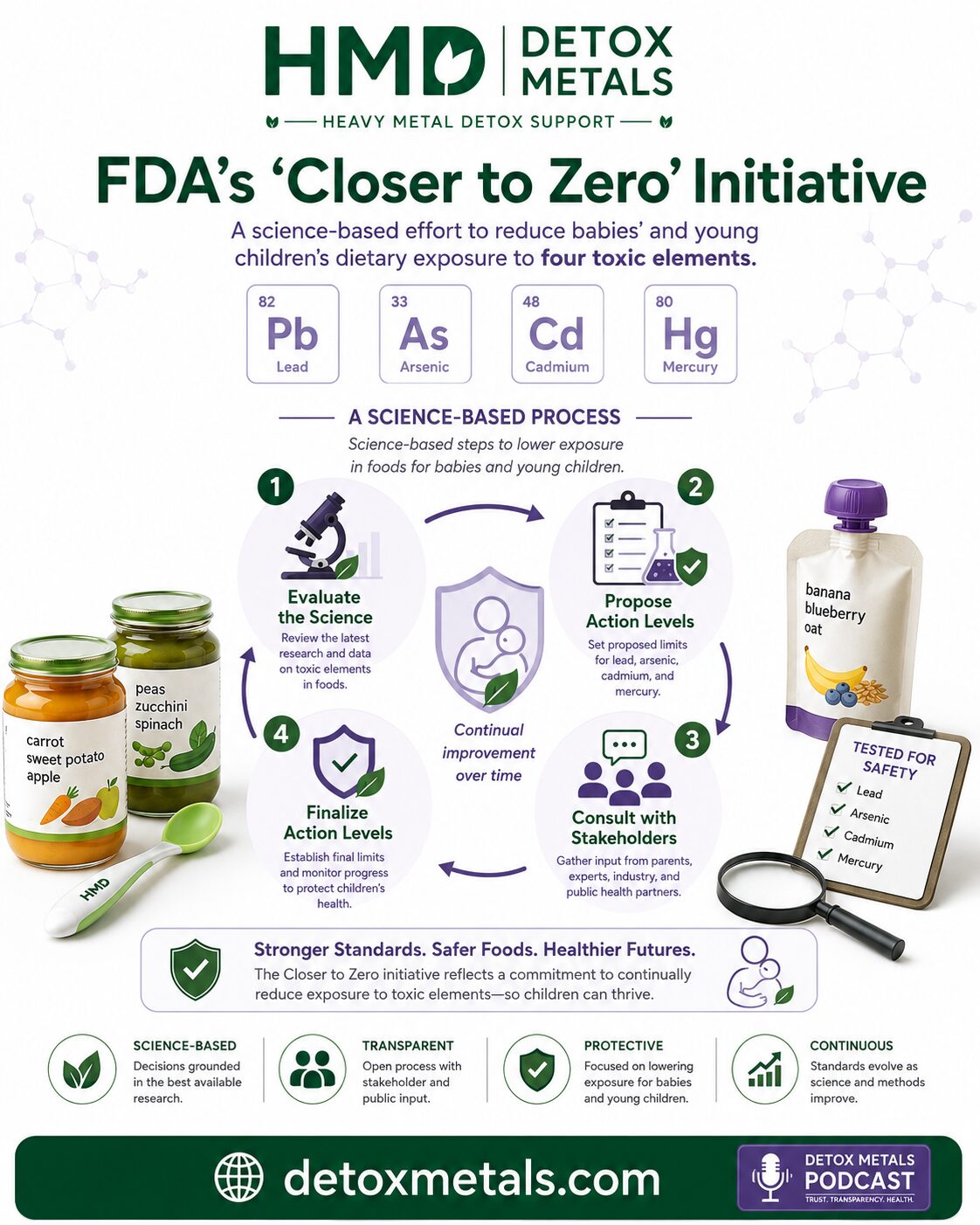
The U.S. Food and Drug Administration created its “Closer to Zero” initiative to reduce children’s dietary exposure to lead, arsenic, cadmium, and mercury in foods commonly eaten by babies and young children.
The goal is not to frighten parents away from healthy foods, but to keep pushing toxic element levels as low as reasonably achievable while maintaining access to nutritious foods.
The phrase “closer to zero” is important. In real-world agriculture, zero is not always technically achievable because these elements can already be present in soil and water. But that should never become an excuse for complacency. It simply means that regulators, manufacturers, growers, and suppliers all need to keep working to reduce exposure wherever possible.
In 2025, the FDA issued final guidance on action levels for lead in processed foods intended for babies and young children under two years of age. These action levels are not the same as saying a level is “ideal.” They are practical regulatory tools designed to keep reducing exposure when complete avoidance is not always possible.
Babies are not just smaller adults. Their detoxification systems, immune systems, gut barriers, and nervous systems are still developing. During pregnancy, infancy, and early childhood, the brain is growing at an extraordinary speed, and this can make early-life exposure to certain toxic elements more concerning.
Lead is one of the biggest concerns because there is no known safe blood lead level in children. Even low blood lead levels have been associated with learning difficulties, developmental delays, behavioural concerns, and reduced intellectual function. This is why lead exposure prevention remains such an important public health issue.
Arsenic is another toxic element that deserves attention, especially inorganic arsenic. Long-term exposure to inorganic arsenic through drinking water and food has been associated with serious health effects, and research has linked early-life consumption of rice and rice products with higher arsenic exposure in infants.
Cadmium can also build up in the body over time, particularly in the kidneys. Dietary cadmium exposure has been studied in infants and young children, and because exposure may come from repeated small amounts over time, it is another reason why food variety matters.
Mercury is usually discussed in relation to fish, especially methylmercury in larger predatory fish. Fish can be a nutritious food for children and pregnant women, but choosing lower-mercury fish and avoiding high-mercury species is the sensible middle path.
The pathway often begins long before food reaches a factory. Crops can absorb contaminants from soil and irrigation water. Processing can concentrate ingredients, and repeated use of the same ingredients can increase a child’s total exposure within a single food category.
Rice is a good example. Rice plants can absorb arsenic more readily than many other grains, partly because rice is often grown in flooded conditions that can make arsenic more available to the plant. This is one reason rice cereal and rice-based snacks have received so much attention in the baby food discussion.
This does not mean every child needs to avoid rice completely. It means rice should not be the only grain or the daily default. Parents can rotate rice with oats, barley, millet, quinoa, buckwheat, and multigrain cereals to reduce dependence on one higher-risk food category.
The FDA finalised an action level of 100 parts per billion for inorganic arsenic in infant rice cereals. This was intended to reduce infants’ dietary exposure to inorganic arsenic while setting a level that industry could realistically meet.
Rice snacks are worth thinking about, too. Rice puffs, rice rusks, rice cakes, and rice-based teething biscuits can become daily habits because they are convenient. The concern is not an occasional snack; it is the repeated pattern of relying on the same rice-based foods.
Fruit juice is another simple area where parents can make a change. Juice may sound natural, but it is not essential for babies or toddlers, and apple juice has been part of the arsenic discussion. The FDA finalised an action level of 10 parts per billion for inorganic arsenic in apple juice.
From a nutrition point of view, whole fruit is usually a better choice than juice. Whole fruit provides fibre and a more complete food structure, while juice can deliver sugar quickly and may become an unnecessary daily habit. For most children, water, breast milk, formula, and age-appropriate whole foods should form the foundation.
Many parents assume that organic baby food automatically means heavy-metal-free baby food. Unfortunately, it is not that simple. Organic standards can reduce exposure to certain synthetic pesticides, but organic farming cannot guarantee that soil or water is free from naturally occurring or historically deposited lead, arsenic, cadmium, or mercury.
This does not mean organic food is pointless. It simply means organic is not the whole answer for heavy metals. A more useful question is whether a company tests for toxic elements, how often it tests, whether it tests finished products, and whether it uses strong sourcing standards for higher-risk ingredients such as rice, root vegetables, and some grains.
Parents can ask baby food brands direct questions: Do you test for lead, arsenic, cadmium, and mercury? Do you test finished products, not only raw ingredients? How often do you test? Do you publish your standards? What action do you take when levels are too high? These are reasonable questions, not extreme ones.
What Parents Can Do at Home
The American Academy of Pediatrics gives a practical and balanced message: the low levels of heavy metals found in baby foods are likely only one part of a child’s overall exposure risk, but exposure from all sources should still be reduced where possible. That is exactly the tone parents need — calm, practical, and informed.
The best home strategy is not fear; it is variety. Serving a wide range of fruits, vegetables, grains, and proteins can reduce over-reliance on any one food that may contain higher levels of a particular contaminant. Variety also supports better nutrition and helps children develop a broader palate.
Parents can rotate grains by using oatmeal, barley, quinoa, millet, buckwheat, and mixed cereals instead of relying mainly on rice cereal. They can rotate vegetables instead of using the same sweet potato or carrot pouch every day. Packaged foods can be useful, but they are best balanced with simple, whole foods prepared at home where possible.
Root vegetables such as carrots and sweet potatoes can still be part of a healthy diet. The point is not to demonise them. The point is to avoid a narrow pattern where a child eats the same root-vegetable pouch every day for months, especially from the same source.
Fish is another good example of balance. Fish provides protein and nutrients important for development, but families should choose lower-mercury options and follow FDA/EPA advice for children, pregnant women, and breastfeeding mothers. The goal is not to avoid fish altogether, but to choose wisely.
Good nutrition itself can be protective. A diet with adequate iron, calcium, and vitamin C may help reduce lead absorption, and children who are deficient in important nutrients may absorb more lead. This is one more reason that nourishment and exposure reduction should go together.
Parents should also remember that food is only one possible source of heavy metal exposure. Lead can come from old paint, household dust, contaminated soil, older plumbing, imported ceramics, spices, cosmetics, toys, and other products. If there is concern about lead exposure, a paediatrician can advise whether blood lead testing is appropriate.
This is especially important because children with lead exposure often do not look obviously sick. Lead can affect development even at levels that do not cause dramatic symptoms. Prevention, testing when appropriate, and removing the source of exposure are the most important steps.
I also want to be very clear about something important: babies and toddlers do not need aggressive detox programmes. They need safer food, clean water, good nutrition, healthy digestion, a safe home environment, and proper paediatric care if exposure is suspected. Supplements, binders, or chelation-style approaches should never be used in babies or young children without qualified medical supervision.
For adults, detoxification support may involve a wider discussion about nutrition, binders, botanicals, testing, and structured wellness protocols. But when we are talking about babies and young children, the first priority is always prevention, exposure reduction, and medical guidance. This is not the place for guesswork.
The positive side of this conversation is that parents are becoming more informed. They are no longer satisfied with vague claims like “natural,” “organic,” or “made with real fruit.” They want transparency, testing, sourcing information, and genuine accountability. I think that is a very healthy shift.
Food companies should welcome these questions. Better questions lead to better standards. They encourage cleaner sourcing, better crop selection, stronger supplier controls, more meaningful testing, and more trust between parents and brands.
Parents are not asking for perfection. They are asking for honesty. They want to know that foods made for babies and toddlers are tested carefully, that higher-risk ingredients are monitored, and that regulators and manufacturers are actively working to reduce exposure over time.
Heavy metals in baby foods are a real issue, but they should not send families into panic. The answer is not to avoid all baby foods, grains, vegetables, fish, or packaged options. The answer is to reduce repeated exposure, diversify the diet, choose lower-risk alternatives where possible, and ask better questions.
At Detox Metals, we believe education is the first step. When people understand where exposures come from, they can make calmer, more informed choices. For children, that means prevention, food variety, safer sourcing, and paediatric guidance. For adults, it may also mean learning more about environmental exposure, testing options, and responsible wellness support.
In my view, this is where responsible parenting and better public health meet. Parents can take practical steps at home, regulators can continue tightening standards, and manufacturers can do the right thing by testing and sourcing more carefully. Babies deserve the cleanest start we can reasonably give them.
The final message is simple: do not panic, but do not ignore the issue either. Rotate foods, reduce reliance on rice-based products, limit juice intake, choose fish wisely, support good nutrition, check other household sources of exposure, and ask brands what they are doing to keep toxic elements as low as possible.

PODCAST: THE LOW-MERCURY SEAFOOD GUIDE Don’t Avoid Fish — Choose Smarter! The Low-Mercury Seafood Guide Fish, Mercury and the Smart Seafood Strategy Fish is one of the most
PODCAST: LEAD & CADMIUM IN CHOCOLATE Dark Chocolate, Cacao and Cadmium The Uncomfortable Truth About a “Healthy Treat” Is Dark Chocolate Still Healthy? The Lead and Cadmium Question Dark
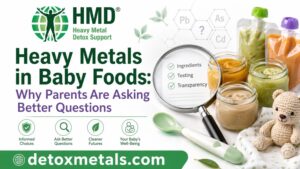
PODCAST: HEAVY METALS IN BABY FOODS Heavy Metals in Baby Foods Why Parents Are Asking Better Questions Why This Conversation Matters There are few things more personal than feeding