PODCAST: Wildfire Smoke, Toxic Ash, and Heavy Metals in Our Air
Wildfire Smoke, Toxic Ash and Heavy Metals
The Hidden Side of Air Pollution
Wildfire smoke is no longer something that only affects people living near forests. In the last few years, huge smoke plumes have travelled across countries, turned city skies orange, shut people indoors, and made air quality warnings part of normal life.
Most of us now understand that wildfire smoke is “bad for the lungs,” but there is a deeper issue that often gets missed: wildfire smoke and ash can carry a complex mixture of fine particles, chemicals, and sometimes toxic metals.
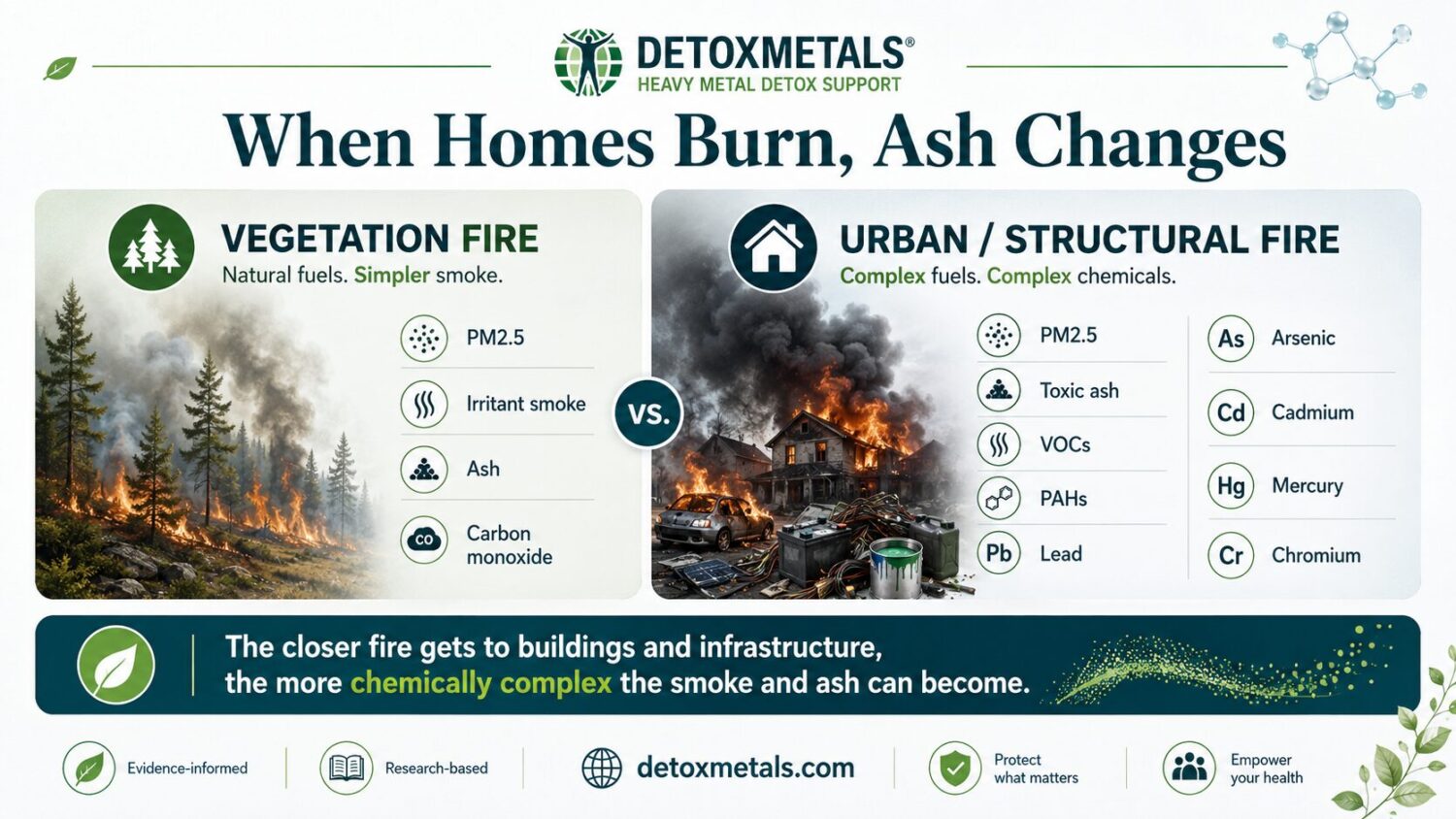
This matters because what burns determines what ends up in the air. A forest fire burning trees, leaves and soil is already a serious air pollution event. But a fire that moves through towns, homes, cars, workshops, batteries, plastics, roofing, paint, plumbing and electronics becomes something more chemically complicated.
It is no longer just “wood smoke.” It can become a moving cloud of microscopic pollution.
Wildfire smoke is more than visible smoke
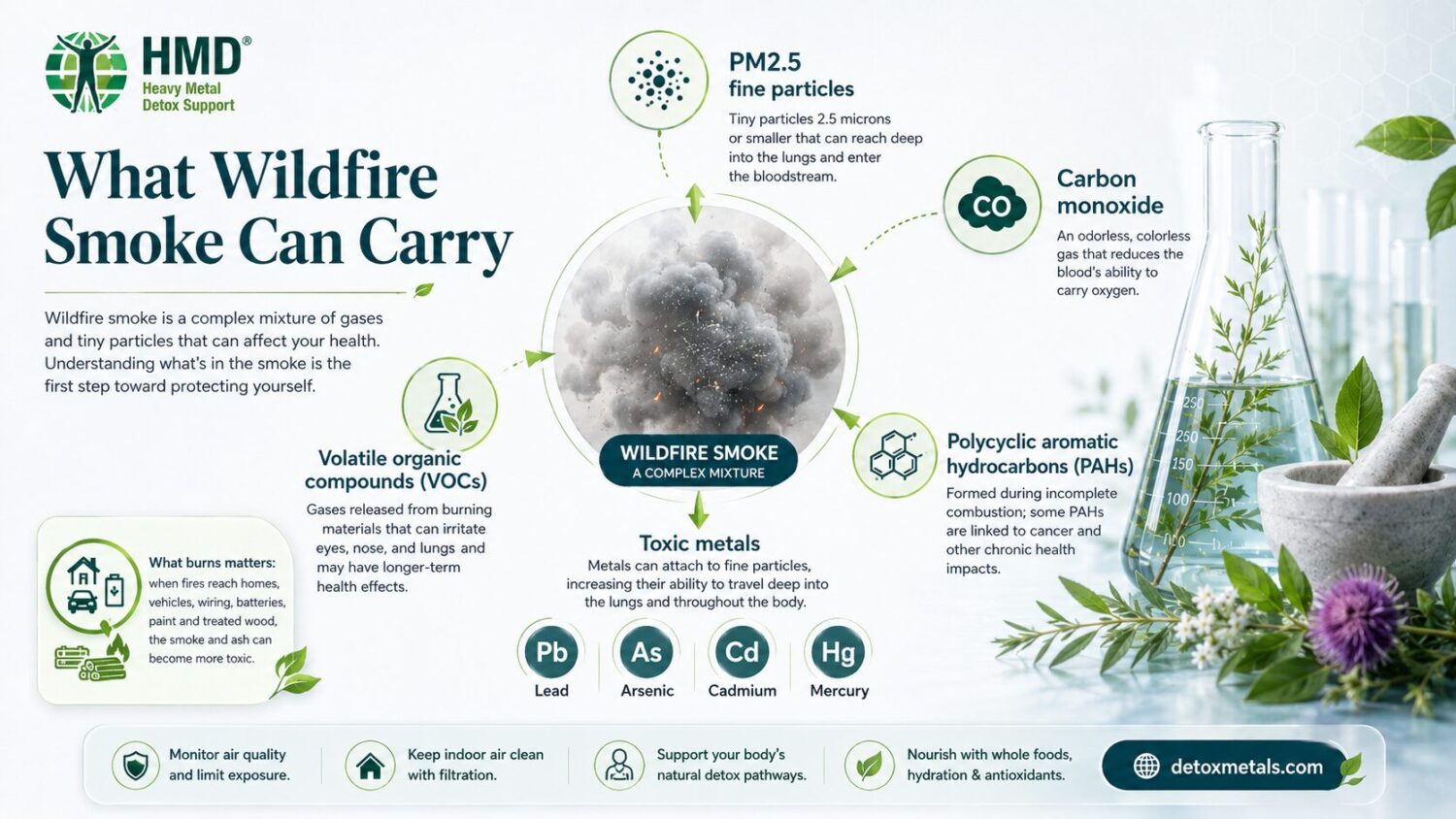
The main pollutant experts focus on during wildfire events is PM2.5, which means fine particulate matter smaller than 2.5 micrometres. These particles are tiny enough to travel deep into the lungs and, in some cases, contribute to body-wide inflammation and cardiovascular stress.
AirNow’s wildfire smoke guide states that PM2.5 is the principal air pollutant of concern for public health during wildfire smoke events.
The Environmental Protection Agency explains that wildfire smoke is a complex mixture. Alongside PM2.5, smoke can contain gases such as carbon monoxide, nitrogen oxides and volatile organic compounds. These can also react in the atmosphere to form ground-level ozone downwind of the fire.
That is one reason smoke can affect people far away from the flames. You do not need to see fire to be exposed. If the wind carries the plume, the particles can travel long distances, enter homes, settle on surfaces and irritate the respiratory system.
The CDC warns that wildfire smoke can irritate the eyes, nose, throat and lungs, make breathing difficult, and trigger coughing or wheezing. People with asthma, COPD, heart disease, diabetes, chronic kidney disease, pregnancy, and children need to be especially careful.
The hidden issue: toxic ash
Smoke is one part of the problem. Ash is another.
After a fire, ash may look like harmless grey dust, but it can contain whatever was burned. In natural vegetation fires, ash may still irritate skin, eyes, nose and throat.
But when buildings, vehicles, treated wood, electronics, paints, plastics, furniture and household chemicals burn, the ash can be contaminated with toxic substances.
Los Angeles County Public Health warns that ash, dust and debris, especially from burned buildings, may contain toxic and cancer-causing chemicals including asbestos, arsenic and lead. It also advises that children should not play in or with items covered by ash.
A California wildfire cleanup guidance document notes that wildfire debris has been found to contain heavy metals including lead, cadmium, chromium, mercury, copper, manganese, nickel, arsenic, zinc, iron and aluminium, as well as other toxic compounds such as PAHs, PCBs, dioxins and furans.
This is a crucial point. Ash is not just dirty dust. It may be chemically active, alkaline, irritating, and contaminated. It can get into shoes, carpets, cars, air-conditioning systems, gardens and children’s play areas. Once it dries, it can become airborne again.
When wildfires burn through towns, the chemistry changes
In the past, many people imagined wildfires as trees burning in remote areas. Today, more fires are happening at the wildland–urban interface, where natural vegetation meets homes, roads, power lines and infrastructure. These fires are much more chemically complex.
A National Academies chapter on wildland-urban interface fires explains that these events create exposure concerns across multiple distances, from the immediate burn zone to regional and even continental smoke impacts.
A 2025 USC report on the Los Angeles fires described how urban wildfires burn homes, cars, fences and infrastructure, releasing harmful substances that can settle into nearby soils.
The evidence is not just theoretical. During the January 2025 Los Angeles fires, CDC’s Morbidity and Mortality Weekly Report described an approximate 110-fold increase in PM2.5 lead levels compared with values from previous days.
That finding is eye-opening. It shows that even when we discuss “air pollution,” the actual particles may include toxic metal residues, depending on what burned.
Heavy metals that may be released during fires
The metals of concern vary depending on the materials involved, but the main ones include:
Lead Lead can come from old paint, plumbing, solder, batteries, building materials, contaminated dust and industrial sources. It is especially concerning for children because lead can affect brain development and learning. WHO states that lead exposure can cause long-term harm, including effects on children’s brain development, anaemia, hypertension, renal impairment, immunotoxicity and reproductive toxicity.
Arsenic Arsenic may be present in treated wood, industrial debris, contaminated soil and certain building materials. Chronic inorganic arsenic exposure is associated with skin, cardiovascular, neurological and cancer risks.
Cadmium Cadmium can come from batteries, pigments, plastics, industrial materials and contaminated soil. It is strongly associated with kidney and bone toxicity in chronic exposure.
Chromium and nickel These may come from metal alloys, industrial materials, plating, paints and some burned infrastructure. Certain forms, especially hexavalent chromium and some nickel compounds, are recognised carcinogenic hazards in occupational and environmental toxicology.
Mercury Mercury may be released from older switches, thermometers, fluorescent lights, electrical devices and industrial sources. It can affect the nervous system, kidneys and immune system depending on the chemical form and exposure route.
A Nature Communications study on wildfire-related metal risk reported that increased heavy metals in particulate matter have been documented during wildfire episodes and may contribute to oxidative stress and health risk. The study also highlighted chromium, including hexavalent chromium, as a potential concern depending on local geology and fire conditions.
How wildfire pollution affects the body
The first and most obvious target is the respiratory system. Fine particles irritate the airways and can trigger asthma, bronchitis symptoms, coughing, chest tightness and shortness of breath. But the effects do not necessarily stop in the lungs.
A major review on wildfire smoke and health impacts describes wildfire smoke as a global concern that contributes to air quality deterioration and affects both adult and child health.
Another review on biomass-burning aerosols focuses on oxidative stress and inflammation as major mechanisms behind health effects.
This is the bridge between smoke exposure and whole-body symptoms. When tiny particles enter the lungs, they can trigger local inflammation. That inflammatory signalling may then affect blood vessels, immune balance, oxidative stress and cardiovascular function.
A 2024 JACC review states that wildfire smoke exposure is associated with cardiovascular disease, with mechanisms including oxidative stress, inflammation, impaired cardiac function and pro-atherosclerotic effects in the circulation.
So, while coughing and irritated eyes may be the obvious short-term symptoms, the deeper concern is that repeated smoke exposure may contribute to:
airway irritation and asthma flare-ups
increased oxidative stress
immune activation
cardiovascular strain
blood vessel dysfunction
worsening of existing heart or lung disease
increased vulnerability in children, pregnancy and older age
Why heavy metals make smoke and ash more concerning
Heavy metals are different from many other pollutants because the body cannot simply “burn them off” or break them down. Metals are elements. They may change chemical form, bind to proteins, move between tissues, or be excreted slowly, but they do not disappear by metabolism.
Metals such as lead, cadmium, mercury and arsenic can interfere with enzymes, mitochondria, antioxidant systems and cell signalling. Many act through oxidative stress, mineral displacement, inflammation and damage to detoxification pathways.
This is why I see wildfire ash as more than a dirty cleanup issue. It is a toxic burden issue.
For example:
Lead can interfere with calcium signalling and neurological function.
Cadmium can accumulate in kidney tissue and affect tubular function.
Mercury can bind sulfur-containing groups and disturb antioxidant systems.
Arsenic can affect mitochondria, DNA regulation and vascular health.
Chromium VI can contribute to oxidative stress and DNA damage.
A person exposed once may recover without obvious long-term problems. But repeated exposure, poor indoor air filtration, contaminated household dust, poor elimination, constipation, low antioxidant status, chronic illness or occupational cleanup work may increase the burden.
When to seek medical help
Please do not try to “detox through” serious symptoms. Seek medical help urgently if you experience:
shortness of breath
chest pain
severe wheezing
confusion
fainting
blue lips
severe headache after smoke exposure
worsening asthma or COPD
pregnancy with heavy smoke exposure
child exposure with persistent coughing or unusual tiredness
suspected exposure to structural ash from burned buildings
For people with known heart or lung disease, it is worth speaking with a healthcare professional before wildfire season, not during the crisis.
Where Dr. Georgiou’s HMD® Protocol fits in
Wildfire smoke and ash remind us that toxic exposure is not just about what we eat or drink. It can come from the air we breathe and the dust that settles around us. For people with a known or suspected heavy metal burden, the best approach is not panic and not random supplement use. It is a structured plan.
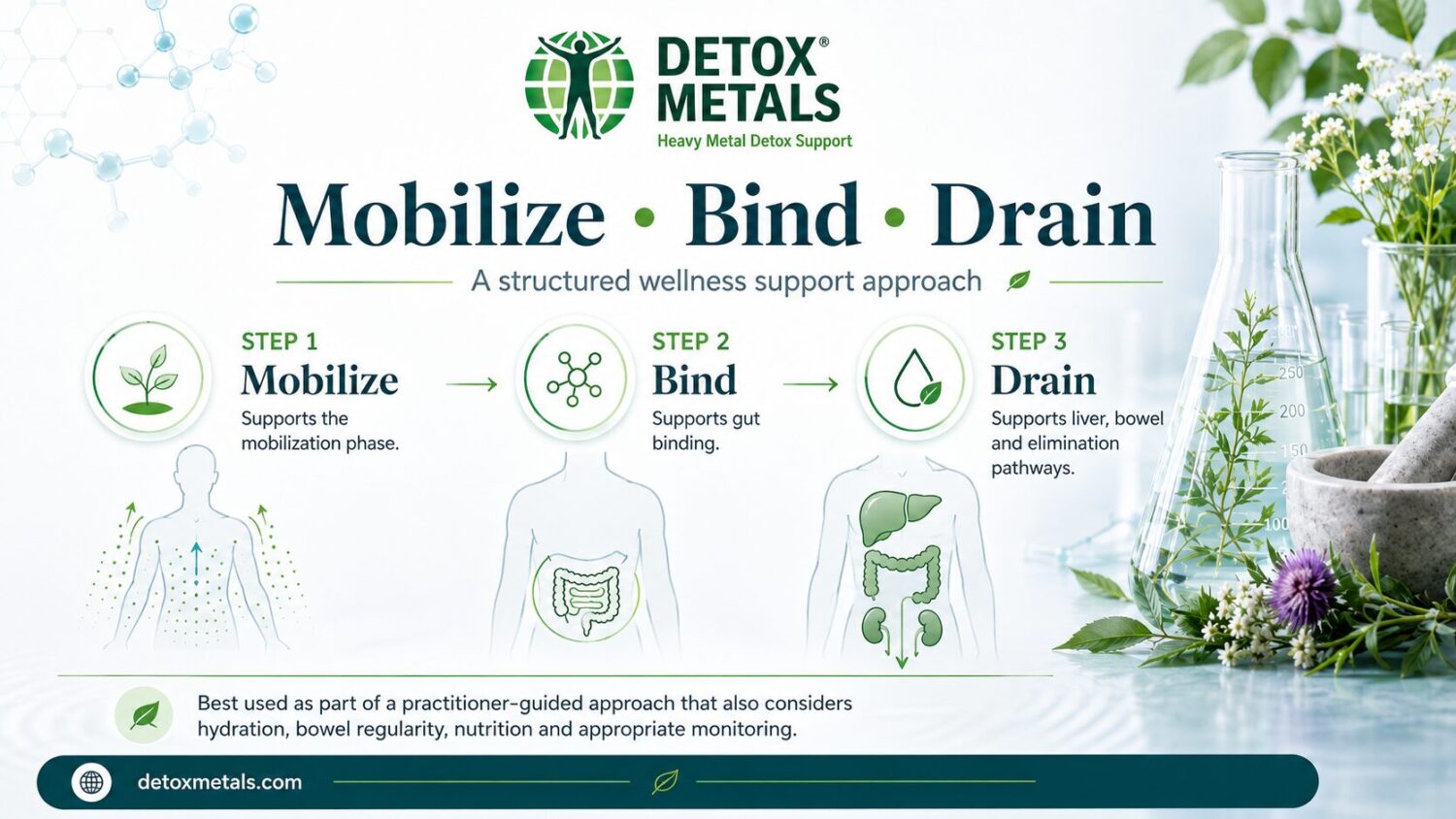
Dr. Georgiou’s HMD® Protocol is built around a practical detoxification concept: mobilize, bind and drain. The DetoxMetals site describes the protocol as a natural heavy metal detox approach and includes HMD® products, chlorella and HMD® Lavage as part of structured wellness support.
In simple terms:
HMD® Daily Wellness Support is used as the mobilizing part of the protocol.
HMD® Chlorella supports binding in the gut.
HMD® Lavage supports drainage and elimination pathways.
I always prefer a thoughtful approach: reduce ongoing exposure first, support the basics, keep the bowels moving, hydrate, test where appropriate, and use a structured protocol rather than guessing.
Wildfire-related exposure is another reminder that detoxification should be intelligent, paced and respectful of the body’s reserves.
Final thought
Wildfire smoke is not just a temporary smell in the air. It is a complex pollution event. When fires burn through natural landscapes, homes, vehicles and infrastructure, they can release particles, chemicals and metals that affect the lungs, heart, immune system and detoxification pathways.
The solution is not fear. It is preparation.
Clean indoor air, smart filtration, safe ash cleanup, good nutrition, reduced exposure and structured detoxification support can all make a difference. In today’s world, protecting ourselves from air pollution is becoming part of everyday health care.
Dr. George J. Georgiou, Ph.D., N.D., D.Sc (AM), M.Sc., B.Sc, is a world-renowned expert in the field of holistic medicine and detoxification. As the inventor of the highly acclaimed Dr. Georgiou's Heavy Metal Detox Protocol, and the main product, HMD™ (Heavy Metal Detox), he has revolutionized the approach to natural heavy metal detoxification. With over 35 years of experience in natural medicine, he has authored 23 books, including the comprehensive guide 'Curing the Incurable with Holistic Medicine,' which offers invaluable insights and over 700 scientific references. Dr. Georgiou's groundbreaking work is sought after by individuals and practitioners worldwide through his Da Vinci Institute of Holistic Medicine and Da Vinci Holistic Health Center based in Larnaca, Cyprus.
20 Everyday Places Toxic Metals Can Hide The Heavy Metal Home Audit Most people think of heavy metal exposure as something that happens in factories, mines, laboratories, or polluted industrial
Are Microplastics Carrying Heavy Metals Into Your Body? The Hidden Link Between Microplastics and Heavy Metals Microplastics are now found in food, water, air, and even human samples. But the
What’s Really Hiding in Your Protein Powder? Healthy Habit or Hidden Toxin Source? Protein powders are popular, convenient and often marketed as healthy — but some may contain unwanted heavy