


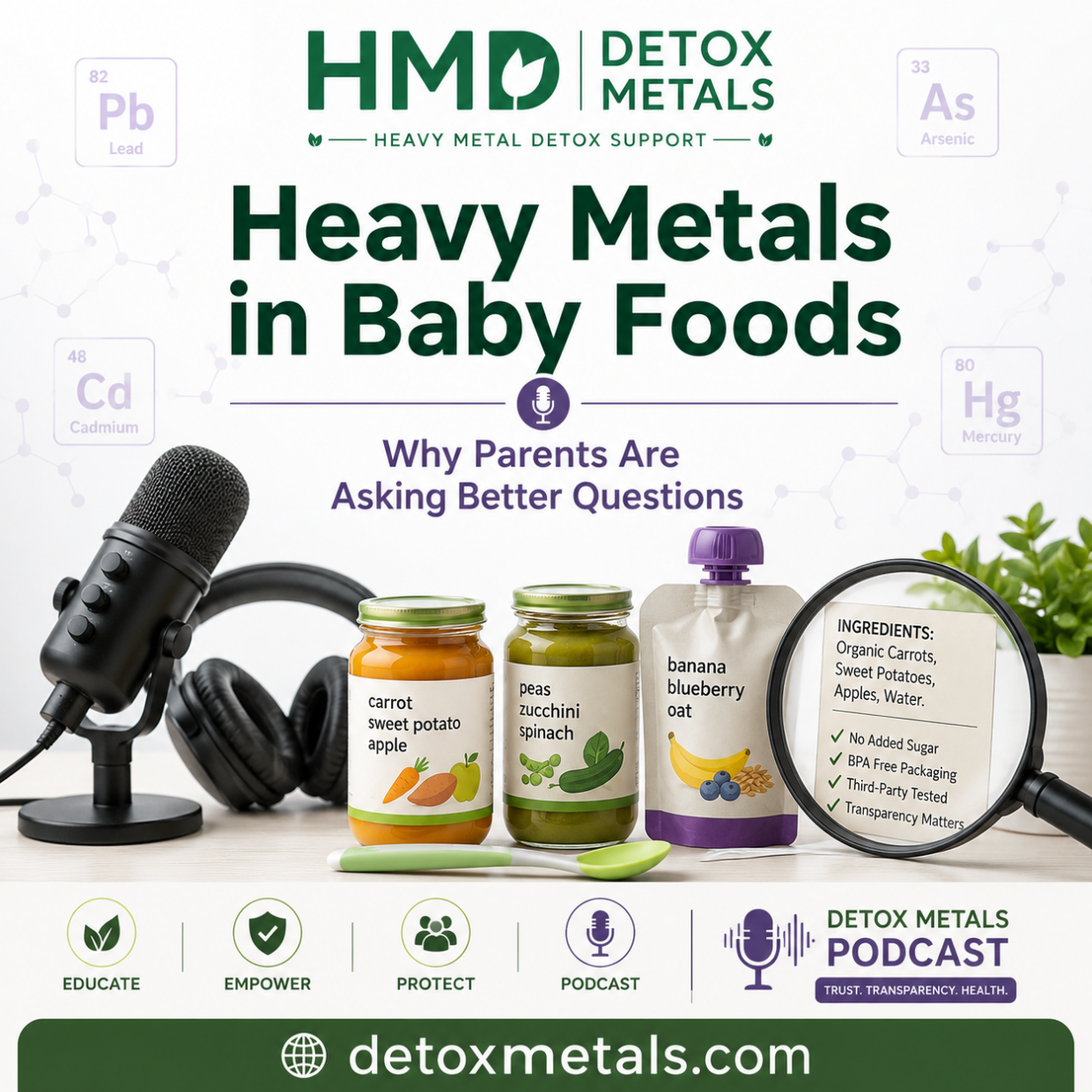
PODCAST: HEAVY METALS IN BABY FOODS
HEAVY METALS IN BABY FOOD
Consumer Reports’ testing shows concerning levels of heavy metals in baby foods such as arsenic, cadmium, and lead
If we read the literature we will know that heavy metals such as lead have been found in drinking water, and that certain kinds of fish contain high levels of mercury, and that worrisome amounts of arsenic have been found in rice.
One of the biggest worries of exposing children and toddlers to heavy metals is how this may affect their cognitive development as well as their I.Q. No parent would want this for their children, so we really need to educate ourselves to protect our children.
“Babies and toddlers are particularly vulnerable due to their smaller size and developing brains and organ systems,” says James E. Rogers, Ph.D., director of food safety research and testing at Consumer Reports. “They also absorb more of the heavy metals that get into their bodies than adults do.”
Consumer Reports analysed 50 packaged foods made for babies and toddlers sold in the USA, checking for cadmium, lead, mercury, and inorganic arsenic, the type most harmful to health.
This is what they found:
- Every product had measurable levels of at least one of these heavy metals: cadmium, inorganic arsenic, or lead.
• About two-thirds (68 percent) had worrisome levels of at least one heavy metal.
Fifteen of the foods would pose potential health risks to a child regularly eating just one serving or less per day.
• Snacks and products containing rice and/or sweet potatoes were particularly likely to have high levels of heavy metals.
• Organic foods were as likely to contain heavy metals as conventional foods.
Wow! This is a revelation, particularly for parent who go out of their way to feed their children organic foods!
How Do Heavy Metals Harm Children
Exposure to even small amounts of these heavy metals at an early age may increase the risk of several health problems, especially lower IQ and behaviour problems, and have been linked to autism and attention deficit hyperactivity disorder.
“The effects of early exposure to heavy metals can have long-lasting impacts that may be impossible to reverse,” says Victor Villarreal, Ph.D., an assistant professor in the department of educational psychology at the University of Texas at San Antonio who has researched the effects of heavy metals on childhood development.
For example, researchers at Duke University looked at 565 adults who had their lead levels measured as children. Those with high childhood lead readings had IQ levels 4.25 points lower, on average, than those with lower childhood lead levels.
Exposure to inorganic arsenic may also affect IQ, according to a recent Columbia University study of third- through fifth-graders in Maine. Students who had been exposed to arsenic in drinking water had IQ levels 5 to 6 points lower, on average, than students who had not been exposed.
Long-Term Risks
The journal Lancet Public Health recently reported that even low levels of lead from food and other sources is responsible for over 400,00 deaths each year – most from cardiovascular disease. Also exposure to methylmercury can cause nerve damage, muscle weakness, lack of coordination, and impaired vision and hearing. And over time, cadmium exposure can lead to kidney, bone, and lung diseases.
What Consumer Reports Tests Found
Consumer Reports research of heavy metals in foods found canned tuna, protein powders, fruit juice, and rice and rice products, including infant rice cereals. This has been confirmed by other food safety organizations and the Food and Drug Administration.
In August 2018, Consumer Report scientists looked at 50 popular baby and toddler foods, then purchased three samples of each from retailers across the country. As they say, “Our findings were a spot check of the market and should not be used to draw definitive conclusions about specific brands”. For more information, download a PDF of CR’s test protocol for heavy metals in baby and toddler foods.
The products fall into four categories:
- Baby cereals.
• Packaged fruits and vegetables.
• Packaged entrées (for example, turkey and rice dinner).
• Packaged snacks, including cookies, crackers, crunches, puffs, snack bars, wafers, and biscuits such as teething biscuits and rice rusks.
About two-thirds of the products (34) they tested contained concerning levels of cadmium, lead, and/or inorganic arsenic; 15 of them would pose a risk to a child who ate one serving or less per day.
Two rice cereals contained measurable levels of methylmercury. Although the amounts were not high enough to be associated with potential health risks from this heavy metal in our analysis, other research suggests that rice cereals may be an overlooked source of mercury in infants’ diets. For example, in tests of 119 infant cereals, researchers at Florida International University found that rice cereals had on average three times as much methylmercury as multigrain cereals and 19 times as much as other non-rice cereals.
Products made with rice fared the worst in their tests. That’s because they contained worrisome amounts of inorganic arsenic, and many also had lead and cadmium.
As a category, snack foods—bars, cookies, crackers, crunches, crisps, puffs, and rice rusks and other teething biscuits – were most problematic, generally because of their rice content. That is quite worrying as 72% of parents said that they often given their babies these snack foods.
How Do Heavy Metals Get into Food?
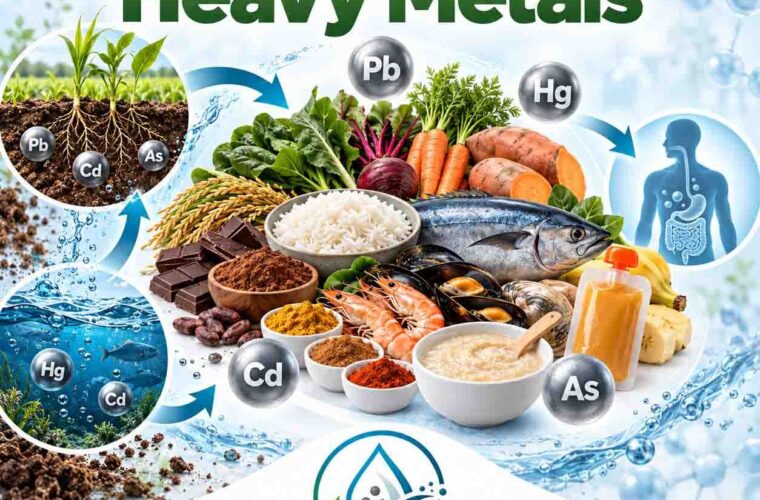
Most of the heavy metals in food come from soil or water that has been contaminated through either farming and manufacturing practices (such as pesticide application, mining, and smelting) or pollution (such as the use of leaded gasoline).
Plants can absorb these heavy metals from the soil and water – rice, however, can absorb 10 times more arsenic than other grains.
This would also apply to baby foods that are home-made using rice as a base – the heavy metals would still find their way into the food.
It is not only rice that contains heavy metals, but they have also been found in samples of baby food apple juice, grape juice and carrots. This is also true whether the products were organic or not, which may point a finger at the manufacturing process also being responsible for adding certain toxic metals into the end product. Also, arsenic and lead are contaminants in soils, so even organic products that are not sprayed with pesticides can absorb these directly from the soil.
What Can Parents Do?
There are several things that parents can be careful of, such as:
- Limit the amount of infant rice cereal your child eats. One can try using oats, buckwheat, millet and quinoa.
• Choose the right rice. Ironically, more nutritious brown rice also had more inorganic arsenic than white rice of the same type. White basmati rice from California, India, and Pakistan, and sushi rice from the U.S., are good choices that had, on average, half as much inorganic arsenic as most other types. Rice cakes, cereal, and pasta were also high in inorganic arsenic.
• Cook rice with plenty of water. It is best to cook rice in 10 parts water to 1 part rice and then drain it well afterwards. This will help reduce arsenic content.
• Limit packaged snacks. Many contain rice flour, which contains heavy metals. The same goes for rice cakes, rice crackers, and chips that you and your child may eat.
• Other foods to substitute. Some of the best foods for snacking that have none or very low levels of heavy metals are: apples, applesauce (unsweetened), avocado, bananas, barley with vegetables, beans, cheese, grapes, hard-boiled eggs, peaches and yoghurt.
• Avoid fruit juice. Research has found inorganic arsenic and lead in many brands of apple and grape juices. The baby should eat the raw fruit than the fruit juice.
• Avoid chocolate. Cocoa powder that chocolate is made from may contain cadmium and lead.
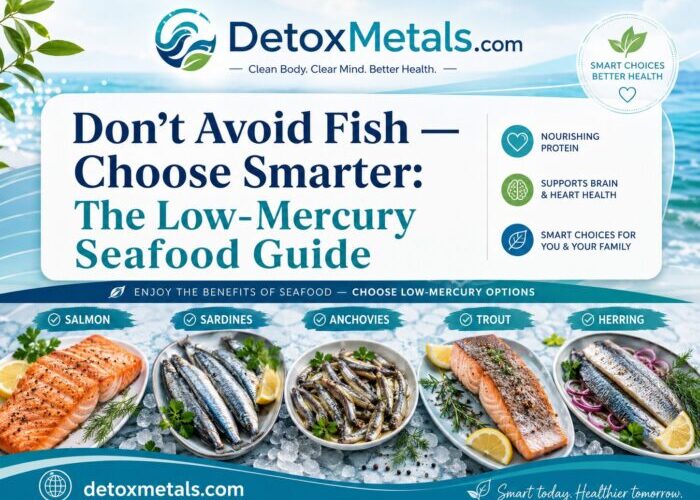
• Choose fish carefully. Bigeye tuna, king mackerel, orange roughy, shark, and swordfish are particularly high in methylmercury. Smaller fish from open water in the wild tend to be “cleaner” than the large or farmed fish that tend to be fed bone meal from large fish toxic in mercury.
• Avoid protein powders. These may contain arsenic, cadmium and lead, particularly if they are plant-based.
• Check water quality. It may be worth having your drinking water tested, but one of the best sources of water to use for the whole family is reverse osmosis water that has been reactivated using a vortex.
• Best to eat healthful whole foods. Variety is the spice of life – rotating foods will likely reduce the heavy metal burden on the body.
Toxic Metal Detox
Reading this article, one can conclude that heavy metals are ubiquitous – they are everywhere and very difficult to completely avoid these days – however careful we are with our food choices.
This is why it is important to also undertake toxic metal detox protocols for the family. The question is what is the best choice, as there are so many on the market?
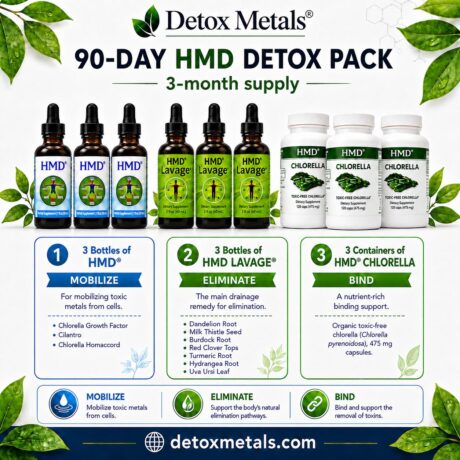
We recommend you take the HMD™ Ultimate Detox Pack which contains the HMD™ (Heavy Metal Detox) as well as LAVAGE, a herbal drainage remedy and organic CHLORELLA.
This can be used by the family, and there are also children’s dosages.
If you are worried about your child’s exposure, talk to your paediatrician about testing.