


IS YOUR FOOD PACKAGING HARMING YOU?
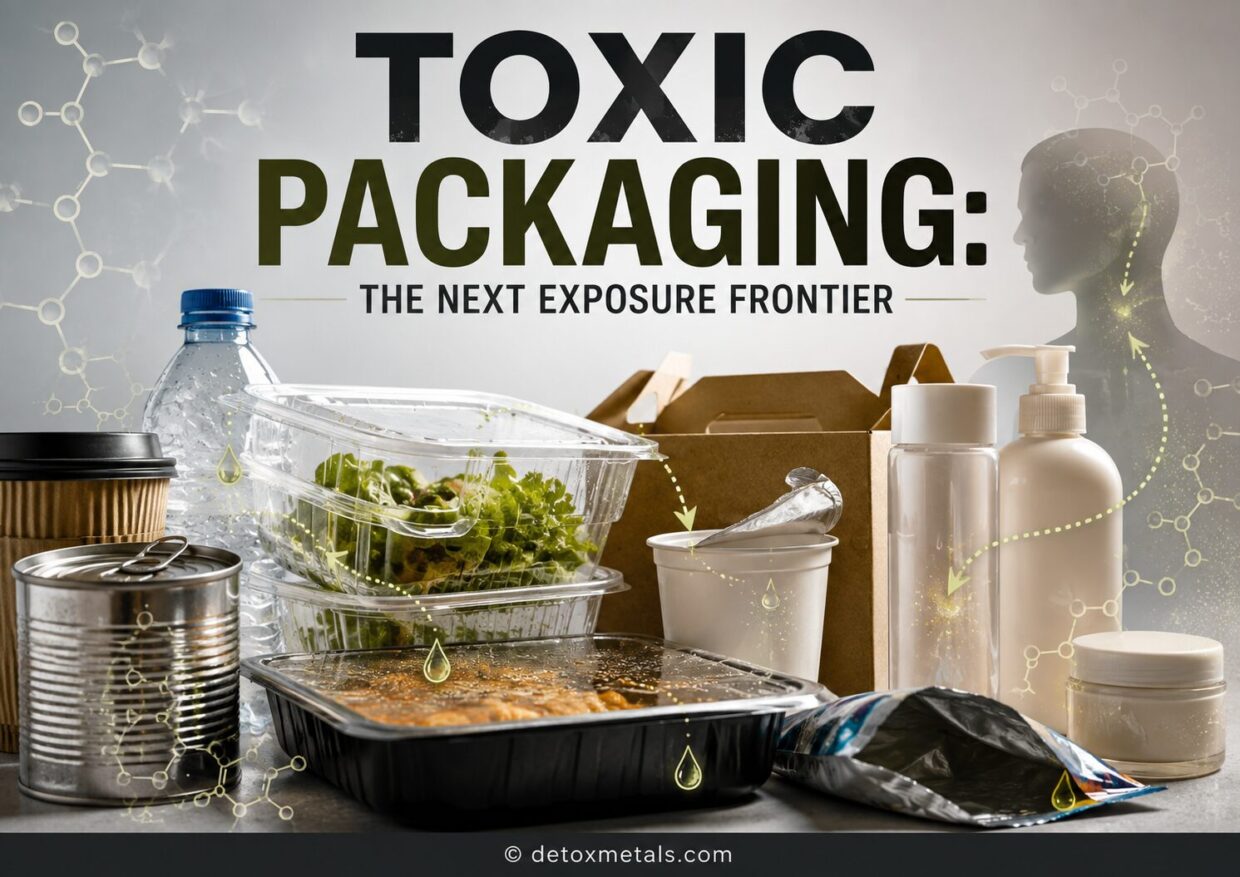
Toxic Packaging: The Next Exposure Frontier
For decades, discussions about food safety have focused mainly on what is deliberately added to food: preservatives, pesticides, artificial colours, excess sugar and other ingredients.
Increasingly, however, researchers are examining another potential source of exposure—the materials that surround, store and process our food.
Plastic containers, can linings, takeaway boxes, baby-food pouches and industrial processing equipment are not always chemically inert. During manufacture, storage, heating and use, substances or microscopic particles may transfer from these materials into food.
This does not mean that all packaged food is unsafe. Food packaging performs essential functions: preventing contamination, extending shelf life and reducing food waste. Nevertheless, emerging evidence suggests that packaging should be considered part of the food-exposure picture rather than simply an invisible protective layer.
The baby-food pouch investigation
Plastic baby-food pouches have become popular because they are lightweight, convenient and easy to use while travelling. Their multilayer construction may include polyethylene, polypropylene, aluminium and adhesives.
In 2025, laboratory testing commissioned by Greenpeace examined selected baby-food products sold in plastic pouches. The investigation reported microplastic particles in the foods tested and suggested that the polyethylene lining of the pouches may have contributed to some of the particles detected.
Greenpeace subsequently reported estimates of thousands of particles per pouch in some of the tested products. The investigation renewed concerns about the routine use of plastic packaging for foods eaten by infants and young children. Greenpeace’s full baby-food pouch report describes the testing and its findings.
These results deserve attention, but they must also be interpreted carefully. This was a limited, advocacy-commissioned investigation—not a large, population-wide risk assessment. It does not establish that every baby-food pouch contains the same number of particles, that packaging was the only source, or that eating a particular pouch will cause illness.
What it does demonstrate is the need for larger independent studies, standardised testing and greater transparency about materials used in food packaging.
Packaging is not always an inert barrier
Food-contact materials can contain many different substances, including:
- Plastic monomers and oligomers
- Plasticisers such as certain phthalates
- Bisphenols used in some resins and coatings
- Antioxidants and ultraviolet stabilisers
- Adhesives and printing-ink components
- Lubricants and manufacturing aids
- Fluorinated substances used in some grease-resistant materials
- Microplastic and nanoplastic particles
- Unintentionally formed by-products and impurities
A scientific review of packaging migration describes several ways in which these substances can reach food, including direct contact, movement through packaging layers, transfer from inks and adhesives, and migration through the airspace inside a package.
Migration does not necessarily mean that a substance is present at a harmful dose. The amount transferred depends on the material, chemical, food and conditions of use. Nevertheless, the possibility of migration means packaging must be assessed as part of the complete food system.
Microplastics from food-contact materials
Microplastics are generally described as plastic particles smaller than five millimetres. Nanoplastics are considerably smaller and may behave differently as a result.
Plastic particles may be introduced into food from the wider environment, raw ingredients, processing, packaging or food-preparation equipment. Separating these sources is scientifically difficult.
A systematic evidence map identified more than 100 studies examining the release of microplastics and nanoplastics from food-contact articles. The researchers concluded that migration can occur during normal and intended use. However, only a small number of the included studies were rated highly reliable, underscoring the urgent need for more robust and consistent testing methods.
The European Food Safety Authority also recognises that packaging and food utensils can release plastic particles. At the same time, it emphasises that information about dietary exposure and the consequences for human health remains limited. EFSA is developing a more comprehensive scientific assessment, but it cannot currently reach firm conclusions about the health risks from microplastics in food.
In other words, the release of particles has been demonstrated, but the health significance of everyday dietary exposure has not yet been established.
Laboratory and animal studies have raised questions about inflammation, oxidative stress and other biological effects. Direct causal evidence in humans, however, remains insufficient. Detection should therefore prompt investigation and sensible exposure reduction—not panic or exaggerated claims.
Plastic food containers
Plastic containers vary considerably. A container designed for cold yoghurt does not necessarily behave like one designed for microwave heating, and a single-use takeaway box is not intended to become a permanent storage container.
Several factors may increase the transfer of substances or particles from plastic into food:
- Heat
- Long storage periods
- Repeated washing and reuse
- Scratching, cracking or clouding
- Contact with fatty foods
- Contact with acidic foods
- Exposure to sunlight
- Use outside the manufacturer’s instructions
A container marked “BPA-free” is not necessarily free from all potentially concerning substances. It means only that bisphenol A was not deliberately used or is below the relevant limit. Other bisphenols, additives or polymers may still be present.
Canned-food linings
Metal cans usually contain an internal coating that prevents the food from reacting directly with the metal. Historically, bisphenol A has been widely used in epoxy-resin can coatings.
Concerns about BPA mainly relate to its endocrine activity—its potential to interfere with hormonal signalling. In December 2024, the European Commission adopted a ban on BPA in food-contact materials, including coatings used in metal cans. The measure includes transitional periods and certain limited exceptions while manufacturers change materials and production systems.
This is an important development, but replacing one chemical does not automatically solve the problem. Alternatives must also be evaluated for migration, endocrine activity and long-term safety. Substituting a well-known chemical with a poorly studied, structurally similar substance can lead to what scientists call a “regrettable substitution.”
Canned foods should not automatically be regarded as unhealthy. Canned beans, fish, tomatoes, and vegetables can be nutritious, affordable, and valuable for food security. The practical goal is variety and informed choice—not the complete avoidance of canned food.
Takeaway containers and grease-resistant packaging
Takeaway food presents a particular challenge because it is often placed into packaging while very hot. Heat, oil, acidity and prolonged contact can all influence migration.
Potential contact materials include:
- Plastic trays and lids
- Polystyrene foam
- Coated paper and cardboard
- Aluminium trays with coated lids
- Plastic films
- Printed wrappers
- Grease-resistant papers and boxes
Some grease-resistant food packaging has historically used per- and polyfluoroalkyl substances, commonly known as PFAS. A systematic evidence map identified numerous PFAS associated with food-contact materials, including paper, plastic and coated metal, while also highlighting major gaps in toxicity and exposure data.
This does not mean every modern takeaway box contains PFAS. Regulations and manufacturing practices are changing, and composition varies between products and countries. It does mean that grease resistance, inks, coatings and adhesives deserve the same scrutiny as the main packaging material.
Food-processing equipment: the exposure source we rarely see
The package on the supermarket shelf is only the final stage of a much longer journey.
During processing, food may contact:
- Plastic tubing and hoses
- Conveyor belts
- Mixers, grinders and cutting equipment
- Storage tanks
- Seals and gaskets
- Filters
- Gloves
- Lubricated machinery
- Plastic-lined vats
- Filling and sealing equipment
Every contact point is another potential route through which particles, residues or chemicals might enter food. Stainless steel is widely used because it is durable and easy to sanitise, but industrial food systems also depend on plastics, rubber, coatings and lubricants.
Observational research has found associations between higher consumption of ultra-processed foods and increased urinary concentrations of certain phthalate metabolites. Packaging and food-production equipment are among the possible contributors, although such studies cannot establish the precise source or prove cause and effect.
This is why packaging exposure cannot be studied in isolation from food manufacturing.
Why fatty, acidic and hot foods matter
Migration is influenced by the chemical character of the food.
Fatty foods may attract fat-soluble packaging components. Acidic foods can interact with certain coatings or metals. Heat increases molecular movement and can accelerate migration. Longer contact times allow more opportunity for transfer.
This helps explain why the same container may behave differently when holding cold dry cereal, hot oily curry or acidic tomato sauce.
The greatest avoidable exposure may therefore come not simply from using plastic, but from combining plastic with heat, fat, acidity, abrasion and repeated use.
Children may require particular consideration
Infants and children consume more food and water relative to their body weight than adults. Their organs, endocrine systems, immune systems and nervous systems are also developing.
This does not mean that packaged baby food is proven to cause harm. It means that avoidable exposures warrant careful study and that precautionary measures can be justified even as researchers continue to determine the exact level of risk.
Parents should not feel guilty about using baby food pouches. They can be helpful during travel, illness or busy periods. The responsibility for safer materials should primarily rest with manufacturers and regulators, not individual families.
Practical options include offering a variety of packaging formats, using glass jars when convenient, including freshly prepared foods where appropriate, and avoiding heating food inside a pouch unless the manufacturer specifically instructs that it is safe.
What consumers can do
It is impossible to eliminate every environmental exposure, and attempting to do so can become expensive and stressful. A small number of practical changes can reduce unnecessary contact without disrupting everyday life.
Use suitable materials for heat
Use glass, ceramic or stainless steel for hot food when practical. Only microwave food in plastic when the container is clearly labelled for that purpose and used according to its instructions.
Never heat a sealed container or pouch unless its directions specifically allow it.
Transfer hot takeaway food
When convenient, transfer very hot takeaway food into a glass or ceramic dish after arriving home. This is particularly relevant for oily, fatty or acidic meals.
Food should still be handled promptly and safely to prevent bacterial growth.
Do not repeatedly reuse single-use packaging
Yoghurt tubs, takeaway boxes and disposable bottles are manufactured for limited use. Repeated washing, heating and scratching may alter the material.
Replace plastic containers that are cracked, heavily scratched, warped or cloudy.
Avoid storing food in opened cans
Once a can has been opened, transfer the leftovers to a covered glass, ceramic, or food-grade storage container and refrigerate.
Vary the source and packaging of food
Rotating among fresh, frozen, dried, canned and glass-packaged foods can prevent dependence on a single packaging type. Variety may be more realistic and nutritionally sensible than trying to eliminate packaged food completely.
Reduce unnecessary ultra-processed foods
Choosing more minimally processed foods can reduce the number of points of contact with manufacturing and packaging. It may also improve the overall nutritional quality of the diet.
Read heating and storage instructions
Packaging that is safe for cold storage is not automatically safe for boiling water, ovens, dishwashers or microwaves. Use products only for their intended purpose.
What exposure reduction does—and does not—mean
Reducing contact with questionable packaging should not be presented as a “detox cure.” There is no supplement, tea or home remedy proven to remove microplastics from the human body.
The most defensible approach is to reduce avoidable exposure while supporting normal health through:
- A varied, nutrient-dense diet
- Adequate fibre
- Regular hydration
- Physical activity
- Sufficient sleep
- Avoidance of smoking
- Appropriate medical care
These habits support general health and the body’s normal elimination systems, but they should not be promoted as treatments that neutralise every packaging chemical.
What manufacturers and regulators need to address
Consumers can make useful choices, but meaningful change requires action earlier in the supply chain.
Priorities should include:
- Full disclosure of chemicals used in food-contact materials.
- Independent migration testing under realistic conditions, including heat, fat, acidity, abrasion and long storage.
- Standardised methods for measuring microplastics and nanoplastics.
- Assessment of complete packaging systems, including inks, coatings, adhesives and closures.
- Testing of replacement chemicals before they are widely adopted.
- Stronger protection for products intended for infants and children.
- Investigation of processing equipment as well as final packaging.
- Safer-by-design materials that minimise migration throughout their useful life.
- Public reporting of test results in language consumers can understand.
A material should not be considered safe merely because its most controversial ingredient has been removed. The finished product, its breakdown products and its real-world use all matter.
A reason for caution—not fear
Packaging is likely to become one of the most important frontiers in environmental health research. It sits at the point where food, chemistry, manufacturing and daily behaviour meet.
Current evidence shows that chemicals and plastic particles can migrate from some food-contact materials. What remains uncertain is how much people are exposed to from different sources and what those exposures mean for long-term human health.
That uncertainty should not be used either to dismiss the issue or to make frightening claims unsupported by evidence.
The sensible response is to exercise precaution with perspective: reduce unnecessary heating and plastic reuse, vary food and packaging choices, favour minimally processed foods when practical, and support stronger independent testing.
Packaging protects food, but it should not quietly add to its chemical burden. The next stage of food safety will require us to examine not only what is inside the package, but the package itself.
This article is for educational purposes and is not a substitute for individual medical or nutritional advice.