


ARE VAPES POISONING YOUR BODY?
Are Disposable Vapes Delivering Lead and Nickel to Your Lungs?
New research is finding lead, nickel, antimony and other metals in disposable-vape aerosols
Here is how they get there—and what the results mean for users
Disposable vapes are often described as delivering little more than nicotine, flavoring and a visible cloud of “vapor.” The chemistry is considerably more complicated.
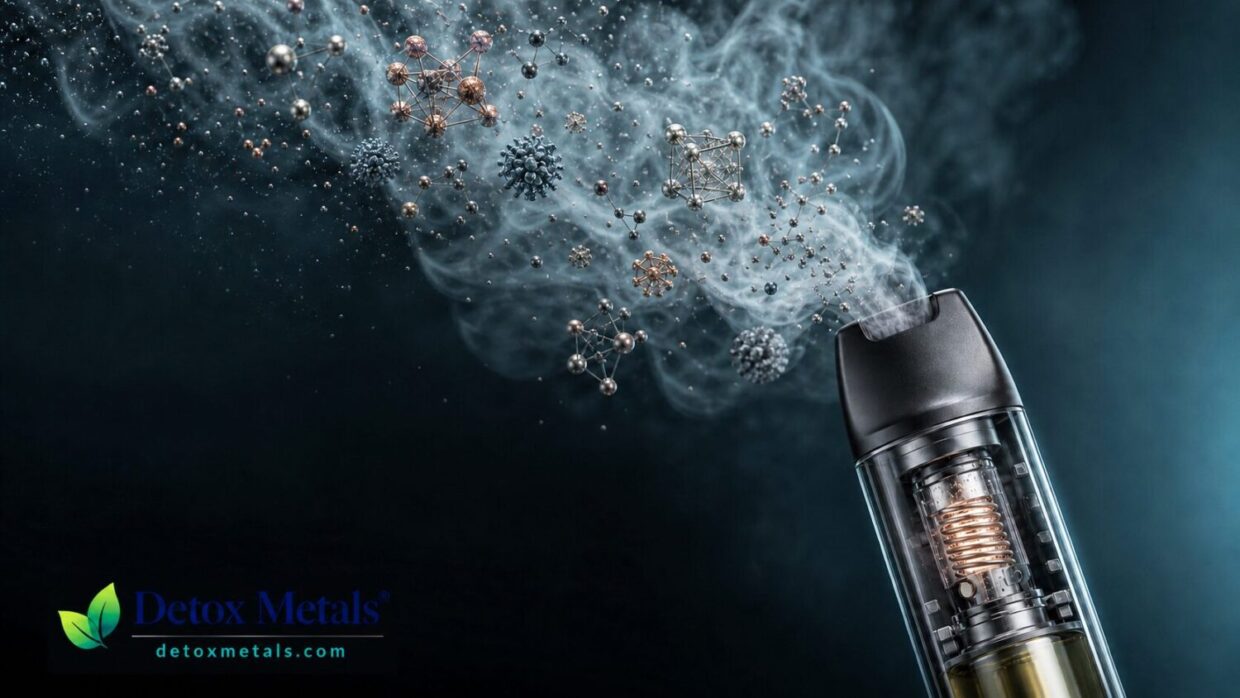
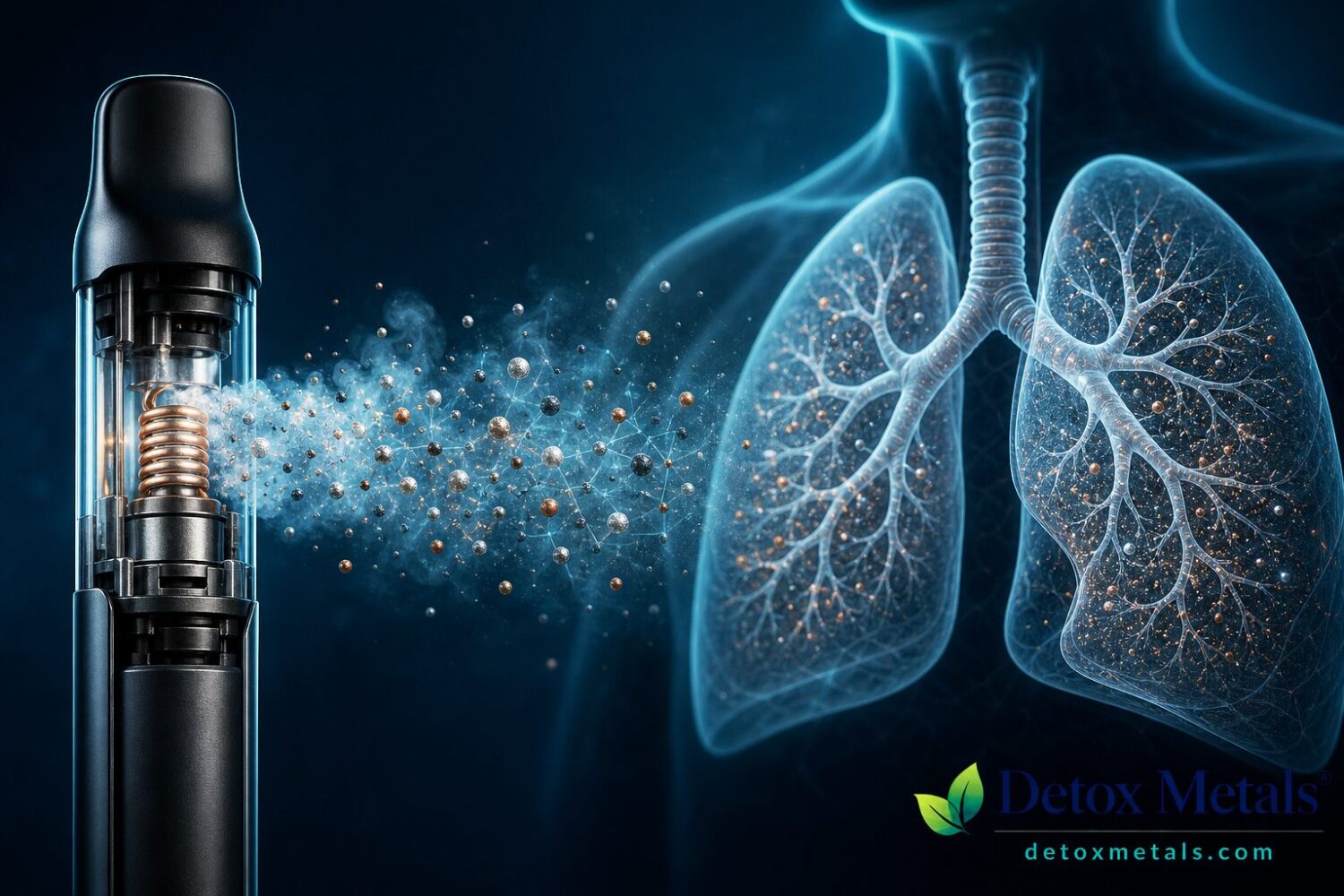
An e-cigarette is a small heating system containing metal coils, electrical connections, soldered joints and other components that sit beside—or directly contact—a chemically reactive liquid. When the device operates, heat transforms that liquid into an aerosol that is drawn deep into the lungs. Along the way, metals from the device can leach into the liquid, shed as particles or enter the aerosol inhaled by the user.
Scientists have detected nickel, lead, chromium, copper, zinc, tin, antimony and other elements in e-cigarette emissions. Newer research suggests that some popular disposable devices may emit surprisingly high concentrations—and that emissions can change substantially as a device is used.
Does this make disposable vaping the next major frontier in heavy-metal exposure? The evidence raises legitimate concerns, but it also requires careful interpretation.
Vapor is not merely water vapor
The cloud produced by an e-cigarette is an aerosol: a suspension of tiny liquid droplets, particles and gases. It may contain nicotine, flavoring chemicals, volatile organic compounds, ultrafine particles and metals.
The Centers for Disease Control and Prevention specifically identifies nickel, tin and lead among the potentially harmful substances found in e-cigarette aerosol. Because some particles are extremely small, they can travel deep into the respiratory tract.
Vapes do not burn tobacco, and their emissions generally contain fewer harmful chemicals than cigarette smoke. That relative comparison, however, does not make vaping harmless. “Less harmful than smoking” and “safe to inhale” are very different conclusions.
The metal issue is especially important because metals do not have to be deliberately added to the e-liquid. The device itself can become the source.
How metals get into vape aerosol
Most e-cigarettes use a battery-powered metal coil or mesh to heat liquid absorbed into a wick. The liquid usually contains propylene glycol, vegetable glycerin, flavorings and, in many products, nicotine and organic acids.
Several parts of this system can contribute metals:
- Heating coils and meshes may contain nickel, chromium, iron or aluminum.
- Brass components can contribute copper, zinc and, in poorly controlled alloys, lead.
- Soldered joints may contain tin or lead.
- Electrical connectors and wires can introduce additional metals.
- Manufacturing contamination can add metals before a device is used.
- Repeated heating and chemical contact can corrode components or accelerate leaching.
This is not merely theoretical. In a frequently cited study of refillable devices, researchers found substantially higher concentrations of chromium, nickel, lead and zinc in tank liquid and aerosol than in the original refill liquid.
The pattern indicated that contact with the coil contaminated the liquid after it entered the device. The results were published in Environmental Health Perspectives.
Earlier research examining disposable e-cigarettes also traced particular elements to specific components, including nickel and chromium in filaments, copper in wires, tin and lead in solder, and copper and zinc in brass clamps.
That investigation detected 35 of the 36 elements tested by researchers, although concentrations varied considerably across devices and brands. Read the study.
What recent research found in popular disposable vapes
A 2025 study published in ACS Central Science examined flavored and unflavored versions of three disposable vape brands: Esco Bar, Flum Pebble and ELF Bar. Researchers analyzed the devices, liquids and aerosols while simulating use over hundreds of puffs.
They detected emissions of chromium, nickel, copper, zinc, lead and antimony. Some devices produced metal concentrations that the researchers reported were considerably higher than those previously measured in conventional cigarettes or earlier e-cigarette designs.
The investigation uncovered several particularly notable findings:
- Nickel and chromium appeared to originate largely from heating components.
- Metal emissions could increase as a device aged through repeated use.
- In some tests, nickel or chromium aerosol concentrations rose by as much as approximately 1,000-fold across the device’s life.
- One product contained leaded bronze components in contact with its e-liquid, providing a plausible source of lead.
- Antimony was detected in aerosols from two of the product lines.
- Chemical analysis found a mixture that included trivalent antimony, a form classified as carcinogenic.
Using the measured emissions, the researchers conducted screening-level risk assessments. Estimated exposure to nickel, lead and trivalent antimony exceeded certain health-based thresholds under the study’s usage assumptions.
These calculations do not prove that the tested products caused cancer or another disease in users. They indicate that the measured emissions were high enough to warrant concern, further investigation and stronger product oversight.
The findings also came from a limited selection of products and cannot automatically be applied to every disposable vape. Nevertheless, they demonstrate what can occur in devices currently sold to consumers. Read the full 2025 study.
Metals may be inhaled as particles
Concentration is not the only question. The physical and chemical form of a metal can affect where it deposits, how it interacts with tissue and how the body processes it.
A 2025 study used single-particle mass spectrometry to examine aerosols from newer disposable products and an FDA-authorized cartridge-based product. Every aerosol tested contained metals.
Chromium, nickel, iron, lead and zinc were detected in particle form, with estimated particle sizes ranging from approximately 14 to 281 nanometers.
At that scale, some particles may penetrate deeply into the lungs. However, particle detection alone cannot tell us exactly how much enters the bloodstream, how long it remains in the body or whether it will cause disease.
Those questions require biological and long-term clinical research. Review the particle study.
The study also found that the FDA-authorized device had the highest particle count for most of the measured metals.
Authorization therefore should not be interpreted as a claim that an e-cigarette produces metal-free aerosol or is medically harmless. Regulatory authorization involves a broader population-level assessment and is not a safety certification.
Why disposable devices may present a special problem
Metal emissions are not unique to disposable vapes. They have been documented in refillable tanks, pods and earlier “cig-a-like” devices. Disposable products nevertheless introduce several concerns.
- Product designs change rapidly
Disposable vape manufacturers frequently release new shapes, heating elements, battery capacities, liquid formulations and flavors. Research and regulatory testing can lag behind these design changes.
A systematic review of e-cigarette metals found wide variation across devices, liquid sources, and sample types. The authors concluded that device characteristics and contact with heating coils were important determinants of contamination. Read the systematic review.
- A single device may deliver thousands of puffs
Modern disposables often hold far more liquid than earlier e-cigarettes. This creates a longer period during which acidic liquid, metal components and repeated heating cycles interact.
The 2025 disposable-vape study found that emissions were not necessarily constant. Measurements taken early in a device’s life did not always predict what it emitted after hundreds of additional puffs. Testing a new device only once could therefore miss contamination that develops during ordinary use.
- Quality may vary between and within brands
Metal emissions can differ by brand, flavor, device construction, manufacturing batch, puffing conditions and stage of use. Two products that look similar may have very different internal materials.
This variability makes it difficult for consumers to judge exposure from packaging, price or flavor alone. It also means that a single laboratory result should not be treated as a universal value for every vape.
- Disposable products generate electronic waste
Used vapes combine a lithium-ion battery, plastic housing, residual nicotine liquid and metal-containing electronic parts. When discarded in household rubbish or the environment, they create fire, poisoning and pollution concerns extending beyond the person using the device.
Heavy-metal exposure is therefore only one part of a broader product-lifecycle problem.
What could inhaled metals do?
The health significance depends on the metal, chemical form, dose, particle size, frequency of exposure and individual susceptibility.
Lead
Lead can affect the nervous system, cardiovascular system, kidneys and blood formation. Developing brains are especially vulnerable, and public-health authorities do not recognize a safe level of lead exposure for children.
The presence of lead in one disposable product is particularly concerning because lead is not required for the vape to function. Its detection in a component described as leaded bronze points to a preventable materials and quality-control problem.
Nickel
Nickel is a respiratory sensitizer and can cause allergic and inflammatory effects. Certain inhaled nickel compounds are carcinogenic. The risk from a particular vape depends on the amount inhaled and the chemical form present, not simply on the word “nickel” appearing in a laboratory report.
Chromium
Chromium exists in different oxidation states with very different toxicological properties. Hexavalent chromium is a recognized carcinogen, while trivalent chromium is generally less hazardous. The 2025 disposable-vape study identified the measured chromium as trivalent chromium.
That is reassuring compared with detecting hexavalent chromium, but it does not establish that repeatedly inhaling chromium-containing aerosol is harmless. Inhalation exposure cannot be evaluated in the same way as consuming trace amounts of a nutrient in food.
Antimony
Antimony compounds can affect the respiratory and cardiovascular systems, and their toxicity depends heavily on chemical form. The detection of trivalent antimony in disposable-vape aerosol deserves further attention because this form has greater toxicological concern than pentavalent antimony.
Copper and zinc
Copper and zinc are essential nutrients, but essentiality does not make concentrated inhalation safe. At sufficient doses, metal-containing particles can contribute to oxidative stress, irritation and inflammatory responses in the lungs.
Are metals actually entering users’ bodies?
Laboratory emission studies show what a device emits. Biomonitoring studies ask whether related metals appear in blood, urine, saliva, exhaled breath or other biological samples.
A 2024 review evaluated 18 studies involving e-cigarette users and people exposed to secondhand aerosol.
Overall, active and passive exposure was associated with higher concentrations of several metals, including lead and cadmium, in biological samples.
On average, however, e-cigarette users generally had lower metal concentrations than combustible-cigarette smokers.
The authors emphasized that the long-term health consequences remain uncertain. Many studies are cross-sectional, device use is difficult to characterize, and people may have additional exposures from smoking, food, work, water or the environment. Read the biomonitoring review.
This evidence supports a cautious conclusion: vaping can contribute to internal metal exposure, but the size of that contribution varies, and researchers have not yet quantified the lifetime disease burden associated specifically with vape-derived metals.
What the science does—and does not—show
The evidence currently supports several conclusions:
- E-cigarette aerosol is not simply water vapor.
- Metals can originate from heating coils and other internal components.
- Disposable vapes can emit lead, nickel, chromium, antimony and other elements.
- Emissions vary considerably between products.
- Emissions may change as a device ages.
- Some vape-associated metals have been detected in users’ biological samples.
- Certain measured emissions have exceeded health-based screening thresholds in laboratory risk assessments.
The evidence does not yet establish:
- that every disposable vape emits dangerous concentrations of every metal;
- that a single exposure causes chronic heavy-metal poisoning;
- the precise long-term disease risk for an individual user;
- that a consumer hair test or “detox panel” can identify vape-derived exposure;
- or that over-the-counter detox products prevent or reverse harm.
These distinctions matter. Responsible risk communication should neither dismiss a genuine exposure pathway nor convert preliminary findings into claims the research cannot support.
Should people who vape get tested for heavy metals?
Routine heavy-metal testing is not automatically useful for every person who has used an e-cigarette. The correct test depends on the suspected metal, intensity and timing of exposure, symptoms, occupation, diet, smoking history and other possible sources.
Anyone concerned about substantial exposure should discuss it with a physician, medical toxicologist or poison-control specialist. Clinicians may consider validated blood or urine testing when a history suggests a meaningful exposure.
Commercial hair analysis and “provoked” urine testing performed after taking a chelating agent can produce misleading results.
A CDC-affiliated clinical review explains that provoked urine results cannot be reliably compared with standard reference ranges and should not be used to diagnose metal poisoning. Read the clinical guidance.
Chelation is a medical treatment for particular, clinically significant poisonings. It is not a general cleanse and can cause serious adverse effects when used inappropriately.
Practical ways to reduce risk
The most effective way to avoid vape-related metal exposure is not to vape. For people who do not smoke, starting to vape provides no health advantage and introduces nicotine addiction and chemical exposure.
People who currently smoke cigarettes face a more complicated risk calculation. Completely switching away from combustible cigarettes may reduce exposure to many toxic combustion products, but using cigarettes and vapes together can sustain or increase overall toxicant exposure. The CDC notes that dual use is not an effective way to protect health.
Practical steps include:
- Seek support to stop using nicotine products. Evidence-based counseling and approved smoking-cessation medications have better-characterized safety profiles than inhaling aerosol from rapidly changing devices.
- Do not assume “nicotine-free” means metal-free. Metals may come from the hardware rather than nicotine.
- Do not continue using a device that tastes burnt, overheats, leaks or behaves abnormally. These signs do not prove metal contamination, but they indicate that the heating system is not functioning normally.
- Avoid modifying or rebuilding disposable devices. Damage can increase leakage, overheating and battery risk.
- Keep vapes away from children and pets. Residual nicotine liquid can cause poisoning even after a device appears empty.
- Use an appropriate battery or hazardous-waste collection program. Do not place lithium-ion vaping devices in household recycling unless local guidance specifically permits it.
- Avoid unproven “metal detox” products. Reducing exposure is more dependable than attempting to counteract it with supplements or cleanses.
The emerging frontier is device chemistry
Disposable vapes represent a new kind of exposure pathway. Unlike traditional environmental sources such as contaminated water, old paint, or industrial emissions, the source is a small consumer device designed to repeatedly heat a chemically complex liquid in contact with metal components—and deliver the resulting aerosol directly to the lungs.
The most important unanswered questions concern chronic exposure. Researchers still need to determine how metal emissions vary across the market, what users actually inhale under real-world conditions, how much is absorbed, which tissues retain it and whether years of exposure contribute to respiratory, cardiovascular, neurological or cancer risk.
We already know enough, however, to reject the idea that vape aerosol is chemically clean. Recent studies show that some disposable products can release toxic metals, that emissions may rise with use, and that product-to-product variability is substantial.
Disposable vapes may indeed be an emerging frontier for heavy-metal exposure—not because every device has been proven to cause metal poisoning, but because rapidly changing hardware is creating inhalation exposures that product labels do not reveal and consumers cannot readily evaluate.
The prudent response is better product surveillance, stronger manufacturing standards, transparent emissions testing and clear public communication.
For individuals, the central principle is simpler: the safest metal exposure from a vape is the exposure that never occurs.
Below is revised copy for the testing section, followed by a short wellness-support section to place immediately before the article’s conclusion. The language links the products while preserving the distinction between screening, diagnosis and general wellness support.
Should people who vape consider mineral or heavy-metal testing?
Routine heavy-metal testing is not automatically necessary for everyone who has used an e-cigarette. The appropriate approach depends on the suspected metal, duration and intensity of vaping, symptoms, occupation, diet, smoking history and other potential sources of exposure.
Blood and urine remain the principal specimens used in clinical medicine when recent or significant exposure is suspected. The correct specimen and collection time vary by metal, so testing should be selected with help from a physician, medical toxicologist, or other appropriately qualified practitioner.
For people seeking a broader, non-invasive review of mineral and element patterns, Detox Metals offers a Hair Tissue Mineral Analysis.
The test measures 29 elements in a small hair sample: 20 nutritional elements and nine potentially toxic elements, including aluminum, arsenic, cadmium, nickel, lead and mercury.
Hair analysis may provide a useful starting point for discussing mineral balance, possible exposure sources, diet, lifestyle and whether additional testing should be considered.
It may be particularly relevant to the disposable-vape discussion because nickel and lead—two elements identified in vape-aerosol research—are included in the panel.
Hair results nevertheless require careful interpretation. External contamination, hair products, chemical treatments, washing procedures and laboratory methods can all influence the findings. Hair analysis should therefore not be used by itself to diagnose heavy-metal poisoning, determine the metal content of a particular vape or predict whether an individual will develop adverse health effects.
Results are best considered alongside symptoms, exposure history and, where appropriate, validated blood or urine testing.
Commercial “provoked” urine testing performed after taking a chelating agent raises a different concern. A CDC-affiliated clinical review explains that provoked results cannot be reliably compared with standard reference ranges and should not be used to diagnose metal poisoning.
Chelation is a medical treatment for particular, clinically significant poisonings. It is not a general cleanse and can cause serious adverse effects when used inappropriately.
Supporting everyday wellness after reducing exposure
Testing is only one part of a sensible strategy. The first priority is always to identify and reduce the exposure itself.
No supplement can make continued vaping risk-free or substitute for smoking-cessation support, appropriate medical evaluation or treatment for confirmed poisoning.
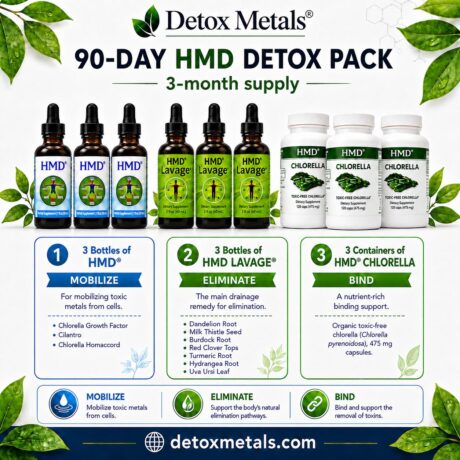
For adults who are also interested in structured botanical and nutritional support, Detox Metals offers 30-, 60- and 90-Day HMD® Wellness Packs.
These packs are designed to support everyday wellness, nutritional balance, and a consistent daily routine, alongside a balanced diet, adequate hydration, and healthy lifestyle habits.
The different pack lengths allow individuals to select a one-, two- or three-month routine according to their wellness goals.
They are intended for general wellness and nutritional support—not to diagnose, treat, cure or prevent heavy-metal poisoning or any other disease.
Anyone who is pregnant, breastfeeding, taking medication, living with a medical condition or concerned about significant metal exposure should consult an appropriately qualified healthcare professional before beginning a supplement programme.
This article is for educational purposes and does not diagnose or treat poisoning. Anyone experiencing breathing difficulty, chest pain, severe vomiting, confusion, seizures or another acute reaction after vaping should seek urgent medical care or contact their local poison-control service.